Category: Offerwalls

  • How to Monetize Users Who Never Buy IAP: The Developer’s Guide (2026)

    How to Monetize Users Who Never Buy IAP: The Developer’s Guide (2026)

    How to Monetize Users Who Never Buy IAP: The Developer’s Guide (2026)

    monetize non-paying users offerwall monetization monetize users who never buy IAP how to monetize free app users

    You launched your free app. You built an in-app purchase (IAP) economy. You integrated banner and rewarded ads. And yet — the vast majority of your users generate zero direct revenue. They install, they play, they leave. They never tap “Buy.”

    This is the central challenge of modern app monetization: how to monetize free app users who will never, under any circumstance, pull out their wallet. In 2026, the answer is no longer “show more ads” or “push harder on IAP.” The answer is to add a revenue layer designed specifically for the non-paying majority — and that layer is offerwall monetization.

    This guide breaks down why most users never pay, why traditional monetization leaves them untouched, and how a hybrid stack that pairs an offerwall with IAP and ads can turn your silent majority into measurable, incremental revenue. If you’re looking for a practical, developer-first approach to monetize users who never buy IAP, this is the roadmap.

    1. The 95% Problem: Why Most Users Never Pay for IAP

    The number that defines the free-to-play economy hasn’t changed in over a decade: roughly 95% of free app users never make a single in-app purchase. Some studies put the figure as high as 98%. Whether your app is a hyper-casual game, a productivity tool, or a simulation RPG, the distribution is remarkably consistent — a tiny sliver of paying users funds the entire product.

    This isn’t a failure of your pricing, your store listing, or your onboarding. It’s a structural reality of free-to-play:

    • Friction: Payment requires a stored card, a biometric confirmation, and a conscious decision to spend real money on virtual goods. Each step is a drop-off point.
    • Demographics: Younger users, students, and users in emerging markets often don’t have a payment method on file — not because they don’t want to pay, but because they can’t.
    • Intent gap: Many users enjoy your app casually. They’ll invest time, not money. The reward they seek is entertainment or utility, not premium progression.
    • Regional constraints: In markets where disposable income is lower, even a $0.99 purchase can feel disproportionate. IAP conversion in tier-3 countries is often below 1%.

    The result: 95%+ of your daily active users (DAU) contribute zero to your IAP revenue line. They aren’t “freeloaders” — they’re your community, your retention engine, your app store reviews, your viral loops. The question isn’t how to convert them into payers. The question is how to monetize non-paying users on their terms, without demanding a credit card.

    Key insight: The 95% who never buy IAP are not a monetization failure — they’re an untapped revenue opportunity that requires a fundamentally different monetization mechanic.

    2. Why Traditional Monetization Misses Non-Paying Users

    If you’re a developer, you likely already run two monetization channels: IAP and ads. Both are essential. Both have a structural blind spot when it comes to non-paying users.

    The IAP blind spot

    IAP only works on users willing and able to pay. By definition, the 95% who never buy are invisible to your IAP funnel. You can A/B test your paywall, lower your price point, offer first-purchase discounts, bundle packs — and you’ll move the needle on the 2–5% who were already close to converting. The 95% remain untouched. No paywall optimization recovers them.

    The ad blind spot

    Ads monetize everyone — in theory. In practice, ad revenue from non-paying users is often thin. Here’s why:

    • eCPMs are low for non-engaged, ad-fatigued users. A user who taps “skip” or ignores banners generates fractions of a cent.
    • Rewarded ads are the closest traditional ads get to monetizing non-payers — but they cap out quickly. A user watches maybe 5–10 rewarded videos per session before fatigue sets in.
    • Ad networks pay for impressions and clicks, not intent. A non-paying user who is actively willing to do something for a reward is worth far more than a passive impression.
    • Interstitial fatigue tanks retention. Aggressive interstitials monetize short-term but drive churn, which compounds the problem.

    The core issue: traditional ad monetization treats every non-paying user the same — as an impression. It doesn’t differentiate between a user who passively ignores ads and a user who would actively engage with an offer if given the chance. That’s the gap an offerwall fills.

    For a deeper primer on how offerwalls work, see our guide: What Is an Offerwall? A Developer’s Introduction.

    3. How Offerwalls Target a Different User Segment Than IAP

    The biggest misconception about offerwalls is that they compete with IAP. They don’t. Offerwalls and IAP target two completely different user segments, and understanding this distinction is the foundation of modern app monetization.

    The IAP user

    Has a payment method, disposable income, and a willingness to pay for speed, cosmetics, or convenience. They want the shortcut. They buy the $9.99 gem pack, the battle pass, the premium subscription. This is your 2–5%.

    The offerwall user

    Will not pay with money — but will pay with time and attention. They’ll install another app, complete a survey, reach level 10 in a partner game, sign up for a trial — in exchange for in-app currency or premium content. This is your 95%. They’re not cheap; they’re currency-rich and cash-poor.

    An offerwall bridges this gap. It gives non-paying users a way to “earn” what paying users “buy,” by completing advertiser-funded offers. The advertiser pays the developer; the user gets a reward; the developer monetizes a user who would otherwise generate zero revenue.

    Dimension IAP User Offerwall User
    Payment method Card / wallet on file Often none, or unwilling to use
    What they pay with Real money Time, attention, engagement
    Motivation Speed, convenience, cosmetics Earning premium content for free
    % of DAU 2–5% Up to 40–60% of engaged non-payers
    Revenue source User’s wallet Advertiser budget
    Cannibalization risk Effectively zero (different segment)

    This is why offerwall monetization is additive, not substitutive. You’re not redirecting IAP revenue — you’re tapping a revenue pool that IAP structurally cannot reach. For a detailed analysis of how offerwalls complement IAP, read Why Offerwalls Complement IAP: Monetizing Non-Paying Users in 2026.

    4. Offerwall + IAP + Ads: The Hybrid Monetization Stack

    The most successful monetized apps in 2026 don’t rely on a single channel. They run a hybrid monetization stack — three revenue layers, each targeting a different user behavior:

    1. IAP — monetizes the paying minority (2–5% of DAU). Highest ARPU per user, lowest reach.
    2. Ads (banner, interstitial, rewarded video) — monetizes the broad middle with passive impressions. Moderate reach, low ARPU per user.
    3. Offerwall — monetizes the active non-paying majority with high-intent, advertiser-funded offers. High reach among non-payers, moderate-to-high ARPU per engaged user.

    Each layer covers the blind spot of the others:

    Layer Monetizes Blind Spot Covered By
    IAP Willing payers 95% who never pay Offerwall
    Ads Passive impressions Low eCPM, ad fatigue Offerwall (high-intent engagement)
    Offerwall Active non-payers Paying users (don’t need it) IAP

    How the layers stack in practice

    A casual game player encounters the stack like this: They see a rewarded video ad for a quick energy refill. They tap the gem store and see IAP options. And — critically — they also see an “Earn Free Gems” button that opens an offerwall, where they can complete a survey or try another game to earn the same gems without spending money. The paying user buys gems. The non-paying user earns them via the offerwall. The passive user watches an ad. Every user is monetized through the channel that matches their behavior.

    This is what it means to monetize users who never buy IAP: not by forcing them into a payment flow, but by giving them an alternative path to value that the advertiser funds. For the broader strategic landscape, see Mobile App Monetization Strategies for 2026 and How Mobile Games Monetize: The 2026 Revenue Guide.

    5. Real ARPDAU Benchmarks When Adding Offerwalls

    Numbers matter. If you’re evaluating whether to add an offerwall, you need realistic benchmarks. Below are aggregated ranges based on Perkox platform data and public developer reports across app categories in 2025–2026.

    App Category Baseline ARPDAU (IAP + Ads) ARPDAU After Adding Offerwall Uplift
    Hyper-casual games $0.02–$0.05 $0.03–$0.07 +30–50%
    Casual / puzzle games $0.08–$0.15 $0.10–$0.20 +15–35%
    Mid-core / RPG games $0.20–$0.60 $0.24–$0.75 +10–25%
    Social casino / slots $0.15–$0.40 $0.19–$0.52 +15–30%
    Utility / lifestyle apps $0.01–$0.04 $0.015–$0.06 +10–25%

    What drives the uplift

    • Engagement rate: What percentage of DAU open the offerwall at least once. Top-performing apps see 15–30% of non-paying DAU engaging with offers monthly.
    • Offer density: More relevant, region-targeted offers mean higher completion rates and higher effective CPE (cost per engagement).
    • Reward loop design: Apps that tie offerwall rewards to a core virtual currency (gems, coins, energy) see higher conversion from offer view to offer completion.
    • Placement: Offerwalls placed in natural reward-seeking moments (store page, reward menu, “out of currency” state) outperform forced or random placements by 2–3x.

    Benchmark: A well-placed offerwall typically adds 10–30% to total ARPDAU without reducing IAP revenue, because it monetizes a user segment IAP cannot reach.

    Keep in mind these are ranges, not guarantees. Your lift depends on DAU composition, geography, and how well the offerwall is integrated. But the directional signal is consistent: offerwalls add incremental ARPDAU by monetizing users who were previously generating zero IAP revenue.

    6. Which App Types Benefit Most From Offerwall Monetization

    Offerwalls aren’t universal. They perform best in apps with specific structural characteristics. Here’s which app categories see the strongest returns:

    Games with a virtual currency or reward economy

    Casual games, puzzle games, simulation games, RPGs, and social casino apps are the natural home for offerwalls. They already have a currency (gems, coins, tokens) that users want. The offerwall becomes an “earn” option in the store — a way to get that currency without paying. The user already understands the reward; the offerwall just adds a path to it.

    Hyper-casual and casual games

    These apps have massive DAU and extremely low IAP conversion — often under 1%. The user base is enormous, engaged, and almost entirely non-paying. Offerwalls turn that 99% into a revenue stream. Even a small per-user lift compounds across millions of sessions.

    Apps with progression or unlock mechanics

    Any app where users hit a paywall, a level gate, or a content unlock can benefit. The offerwall gives non-paying users an alternative route past the gate — complete an offer, unlock the content. This is the same value proposition as rewarded ads, but with higher payouts and more offer variety.

    Apps with engaged but price-sensitive audiences

    Apps popular in emerging markets, student demographics, or younger audiences often have high engagement and near-zero IAP conversion. Offerwalls funded by advertiser budgets monetize these users in a way IAP structurally cannot.

    Where offerwalls are less effective

    • Pure utility apps with no reward loop or virtual currency (e.g., a calculator, a flashlight). There’s no “earn” motivation.
    • Apps with very low session frequency — offerwalls need repeated engagement to generate meaningful revenue.
    • Apps where the user base is predominantly paying — if 80% of your users already buy IAP, the offerwall ceiling is low (though it still captures the remaining 20%).

    The pattern is clear: apps with engaged non-paying users and a reward economy benefit most. If your app has both, an offerwall is one of the highest-ROI monetization integrations you can add in 2026.

    7. How to Add an Offerwall Without Hurting UX

    The most common concern developers raise about offerwalls is UX impact. Done wrong, an offerwall feels like a spammy ad wall. Done right, it feels like a natural, optional part of the reward economy. Here’s how to integrate an offerwall without hurting user experience:

    1. Make it opt-in, never forced

    Never auto-open the offerwall. Never insert it as an interstitial. The offerwall should sit behind a clear, labeled button — “Earn Free Gems,” “Get More Coins,” “Free Rewards” — that the user chooses to tap. Forced offerwalls drive churn; opt-in offerwalls drive incremental revenue.

    2. Place it where users seek rewards

    The best placement is the store page or currency purchase screen — the exact moment a user realizes they need currency and is deciding whether to pay. Add an “Earn” tab next to “Buy.” Users who were about to leave because they can’t or won’t pay now have an alternative. Other strong placements: the rewards menu, the “out of energy” state, and level-up celebration screens.

    3. Use native UI, not a jarring popup

    The offerwall should open in a view that matches your app’s visual language — same fonts, same button styles, same color scheme. Modern offerwall SDKs (including Perkox) support theming and customization so the offerwall feels like part of your app, not a third-party intrusion.

    4. Reward with your existing virtual currency

    The offerwall reward should be the same currency users would buy with IAP. If your IAP sells gems, the offerwall should reward gems. This creates a direct mental equivalence — “I can buy 100 gems for $4.99, or earn 100 gems by completing an offer” — which drives engagement from non-payers without devaluing the IAP for payers.

    5. Be transparent about what offers entail

    Each offer should clearly state what the user needs to do (“Install and open,” “Reach level 10,” “Complete a 5-minute survey”) and what the reward is. Transparency builds trust; ambiguity breeds complaints and uninstalls.

    6. Frequency-cap and respect fatigue

    Don’t badge or animate the “Earn” button aggressively. A subtle indicator that new offers are available is enough. Users who engage will find it; users who don’t shouldn’t be nagged.

    7. Segment: don’t show the offerwall to your top payers

    Use your analytics to identify users who have made IAP in the last 30 days and suppress or de-emphasize the offerwall for them. This eliminates even the theoretical risk of cannibalization and keeps the offerwall focused on its target segment: non-paying users.

    Rule of thumb: if a user can’t tell the difference between your offerwall and a native rewards menu, you’ve integrated it correctly.

    8. Common Mistakes When Monetizing Non-Paying Users

    Even developers who adopt offerwalls early often leave revenue on the table due to implementation mistakes. Here are the most common ones — and how to avoid them:

    Mistake 1: Treating the offerwall as an ad, not a feature

    If you bury the offerwall behind an ad network or treat it as just another ad unit, it underperforms. The offerwall is a feature — a reward path for non-paying users. Market it internally as “Free Rewards” or “Earn Currency,” not as advertising. Frame and placement matter enormously.

    Mistake 2: Forcing or auto-triggering the offerwall

    Auto-opening the offerwall on app launch, between levels, or on every store visit is the fastest way to tank retention. The offerwall must be user-initiated. Forced exposure signals desperation and degrades trust.

    Mistake 3: Rewarding with a disconnected currency

    If your IAP sells gems but your offerwall rewards “points” that convert to gems at a confusing rate, users won’t engage. Keep the reward currency identical and the value transparent. One offer = X gems. Simple.

    Mistake 4: Not geo-targeting offers

    Offer availability and payouts vary dramatically by country. A user in a high-CPM region should see different (and often higher-paying) offers than a user in a low-CPM region. Failing to geo-target means you either under-monetize high-value regions or show irrelevant offers in low-value ones. A good offerwall SDK handles this automatically.

    Mistake 5: Ignoring the offerwall in analytics

    If you don’t track offerwall revenue as a distinct line item alongside IAP and ad revenue, you can’t measure its incremental impact. Instrument your dashboard to show ARPDAU broken down by channel: IAP ARPDAU, ad ARPDAU, offerwall ARPDAU. Only then can you prove the offerwall is additive and optimize placement and rewards.

    Mistake 6: Cannibalization fear paralysis

    Some developers avoid offerwalls entirely out of fear they’ll cannibalize IAP. This fear is largely unfounded when the offerwall is segmented and opt-in. The data is consistent: offerwall revenue comes from users who were not buying IAP. The paralysis of inaction costs more than the theoretical risk of cannibalization ever could.

    Mistake 7: Choosing the wrong offerwall provider

    Not all offerwalls are equal. Look for: high offer fill rates across geos, transparent reporting, fast payout, SDK quality, customization/theming support, and developer-first documentation. A clunky SDK or opaque reporting will cost you revenue and engineering time. Evaluate providers on these criteria, not just on headline eCPM claims.

    9. FAQ: Monetizing Non-Paying App Users

    What percentage of app users actually buy in-app purchases?

    Industry data consistently shows that only about 2% to 5% of free-to-play app users ever make an in-app purchase. The remaining 95% or more generate zero IAP revenue. This is why developers need strategies like offerwall monetization to capture value from non-paying users — not by converting them into payers, but by giving them an advertiser-funded path to rewards.

    Can offerwalls hurt my app’s IAP revenue?

    When implemented correctly, offerwalls do not cannibalize IAP revenue. They target a distinct user segment — users who have never purchased IAP and never will. Paying users continue buying IAP while non-paying users engage with the offerwall, creating an additive revenue layer rather than a replacement. Segmenting your top payers (suppressing the offerwall for recent IAP buyers) eliminates even the theoretical risk.

    How much ARPDAU can an offerwall add to my app?

    ARPDAU lift varies by app type and implementation, but developers commonly report a 10% to 30% increase in total ARPDAU after adding an offerwall. Casual games and reward-driven apps see the highest lifts (up to 30–50% in hyper-casual), while utility apps see smaller but still meaningful gains (10–25%). The lift comes entirely from monetizing users who were previously generating zero IAP revenue.

    Which app types benefit most from offerwall monetization?

    Casual and hyper-casual games, simulation and RPG games, social casino apps, and any free app with a virtual currency or reward economy benefit the most. Apps with engaged but non-paying user bases — especially in price-sensitive demographics or emerging markets — are ideal candidates for offerwall monetization. Pure utility apps without a reward loop see minimal benefit.

    How do I add an offerwall without hurting my app’s user experience?

    Place the offerwall behind an opt-in entry point — never force it on users. Integrate it where users already seek rewards (the store page, reward menu, or “out of currency” state), use native UI elements that match your app’s design, avoid interrupting gameplay, and clearly label every offer with its task and reward. A well-integrated offerwall feels like an optional reward menu, not an ad interruption.

    Ready to Monetize Your Non-Paying Users?

    Perkox is a developer-first offerwall SDK that helps you monetize the 95% of users who never buy IAP — with high-fill offers, transparent reporting, and a seamless SDK integration.

    👉 Get Started with Perkox  | 
    📚 Read the Docs

    Add an offerwall in days, not weeks. Monetize every user — paying or not.

    Conclusion: Stop Leaving 95% of Your Users Unmonetized

    The math is simple. If 95% of your users never buy IAP, then 95% of your user base is generating revenue only through low-CPM ads — or not at all. That’s not a monetization strategy. That’s a monetization gap.

    Offerwall monetization closes that gap. It doesn’t replace IAP. It doesn’t replace ads. It sits alongside them as a third revenue layer, designed for the user segment the other two can’t reach: the active, engaged, but non-paying majority. When you monetize non-paying users with an offerwall, you’re not asking them to change — you’re changing how you value their time and attention.

    The developers who win in 2026 will be the ones who stop treating non-paying users as a cost and start treating them as a revenue channel. The hybrid stack — IAP for payers, ads for the passive middle, offerwall for the active non-paying majority — is how you do it. The tools exist. The benchmarks are proven. The only question is whether you integrate before or after your competitors do.

    Start monetizing your non-paying users today:


    Published by Perkox — developer-first offerwall SDK monetization. © 2026 Perkox. All rights reserved.

  • Top 15 Offerwall Companies in 2026: Complete List for App Developers

    Top 15 Offerwall Companies in 2026: Complete List for App Developers


    Top 15 Offerwall Companies in 2026: Complete List for App Developers


    Top 15 Offerwall Companies in 2026: Complete List for App Developers

    Updated August 2026 · 18 min read

    The offerwall has quietly become one of the most profitable ad formats in mobile monetization. For games and apps with virtual economies, a well-tuned offerwall can generate eCPMs of $50–$150+ in tier-1 markets — often out-earning banner, interstitial, and rewarded video combined. But the network you choose matters as much as the placement itself. In this guide we rank the top 15 offerwall companies of 2026, compare their SDKs, offer types, and developer economics, and explain how to pick the right one for your app.

    If you’ve been researching offerwall ad networks from last year, this 2026 update adds five new entrants, refreshes every eCPM and payout figure, and reflects the major consolidations and SDK launches that have reshaped the market.

    What Is an Offerwall Company?

    An offerwall company is an advertising-network provider that operates a rewarded offerwall — an in-app surface where users complete offers (surveys, app installs, video views, free trials, sign-ups) in exchange for virtual currency, premium content, or other in-app rewards. The offerwall company aggregates offers from hundreds of advertisers and supply-side partners, serves them through an SDK or API integration, and pays the app developer a revenue share for each completed action.

    The economics are straightforward but powerful. Advertisers pay the network a fixed CPA (cost-per-action) — anywhere from $0.10 for a video view to $50+ for a qualifying credit-card sign-up. The network keeps a margin and passes the rest to the developer. The developer then converts that revenue into virtual currency for the user, keeping the spread. Because offers are high-intent and user-initiated, effective eCPMs dwarf those of passive ad formats.

    The term “offerwall company” is often used interchangeably with offerwall network, though a network may run multiple ad formats beyond the offerwall (rewarded video, interstitials) while a pure-play offerwall company focuses solely on the rewarded-offer surface. For a deeper primer, see our guide on what an offerwall is and how it works.

    How to Evaluate Offerwall Companies

    Not every offerwall network is built the same. Before you integrate an SDK, evaluate candidates against these criteria:

    1. eCPM and Revenue Share

    Ask for average eCPMs in your key geographies and app category. A network quoting $30 eCPM in the US may deliver $80 in a casino game and $20 in a utility app. Always ask for the revenue share — some companies advertise gross eCPM while keeping 40–50% of the advertiser payout. Transparent networks publish their share or let you negotiate it.

    2. Offer Inventory Depth and Quality

    A great offerwall has hundreds of live offers across surveys, CPI, CPA, and video. More importantly, the offers must convert. Low-quality offerwalls pad their wall with dead links and misleading offers that frustrate users and generate support tickets. Look for networks with survey aggregators (the highest-paying vertical) and direct advertiser relationships.

    3. SDK Quality and Integration

    How heavy is the SDK? Does it support Unity, Unreal, Flutter, React Native, Cordova, and native iOS/Android? Is server-to-server (S2S) callback supported for fraud-safe reward delivery? A bloated SDK that crashes on older devices will cost you more in churn than it earns in revenue.

    4. Mediation and Waterfall Support

    Most top-earning apps run 2–4 offerwall companies in a mediated waterfall. Does the network play well with others? Does it offer a managed mediation layer, or do you need a third-party mediator like MAX or AdMob?

    5. Payout Terms and Minimums

    Net-30 is common; net-15 or net-7 is developer-friendly. Minimum payouts range from $50 to $500. If you’re a smaller developer, low thresholds and faster payouts matter.

    6. Fraud Prevention and Offer Vetting

    Offer fraud — fake completions, emulator farms, VPN arbitrage — eats into advertiser budgets and eventually suppresses your eCPM. The best offerwall companies invest heavily in fraud detection and offer QA.

    7. Developer Support and Dashboard

    Can you reach a human when something breaks? Is the dashboard real-time or delayed 24 hours? These seem minor until a tracking bug costs you a week of revenue.

    2026 Offerwall Companies Comparison Table

    Company Founded SDKs Offer Types Best For
    Perkox 2023 iOS, Android, Unity, Flutter, RN, S2S Surveys, CPI, CPA, video, subscriptions Developer-first monetization with transparent revenue share
    ironSource 2010 iOS, Android, Unity, S2S CPI, CPA, rewarded video, offerwall Large-scale games needing an all-in-one platform
    Tapjoy 2007 iOS, Android, Unity, S2S Surveys, CPI, CPA, video F2P games with mature virtual economies
    AppLovin 2012 iOS, Android, Unity, Unreal, S2S CPI, CPA, rewarded video, offerwall Apps already on MAX mediation
    AdGate Media 2011 iOS, Android, Unity, Web, S2S Surveys, CPI, CPA, video Survey-heavy revenue and web/desktop apps
    AdGem 2014 iOS, Android, Unity, S2S CPI, CPA, surveys, video Global reach with strong tier-2/3 fill
    RevU 2019 iOS, Android, Unity, S2S CPI, CPA, surveys Aggressive payouts and high survey fill
    Torox (formerly OfferToro) 2012 iOS, Android, Unity, Web, S2S CPI, CPA, surveys, video Flexible integration and web extensions
    BitLabs 2020 iOS, Android, Unity, Flutter, S2S Surveys, CPI, CPA Survey-first monetization with clean SDK
    Pollfish 2013 iOS, Android, Unity, Web, S2S Surveys (programmatic) Apps wanting survey-only, brand-safe inventory
    Lootably 2018 iOS, Android, Unity, Web, S2S CPI, CPA, surveys, video GPT and rewards sites needing a hosted offerwall
    adjoe 2018 iOS, Android, Unity, S2S CPI, rewarded video, offerwall Casual and hypercasual games
    Fyber 2009 iOS, Android, Unity, S2S CPI, CPA, rewarded video, offerwall Apps on the Digital Turbine stack
    Digital Turbine 1998 iOS, Android, Unity, S2S CPI, app-installs, offerwall, DT Media Carrier and OEM distribution partners
    Ayet Studios 2015 iOS, Android, Unity, Web, S2S CPI, CPA, surveys, video Cost-conscious apps and GPT sites

    The Top 15 Offerwall Companies — Detailed Reviews

    1. Perkox

    Perkox is the newest entrant on this list and the one we’ll spend the most time on — not because we’re biased, but because it has rapidly become the developer-first choice among offerwall companies in 2026. Founded in 2023, Perkox built its platform around three principles that legacy networks historically neglected: transparent revenue share, lightweight multi-platform SDKs, and genuinely responsive developer support.

    Perkox’s offerwall blends direct survey supply, high-paying CPI/CPA offers, and subscription-based rewards into a single wall that auto-optimizes per user and geography. In internal benchmarks across 200+ partner apps, Perkox consistently delivers eCPMs within 10–20% of — and sometimes above — ironSource and Tapjoy in tier-1 markets, while offering a higher net revenue share to developers thanks to a leaner operating model.

    The SDK supports iOS, Android, Unity, Flutter, React Native, and full S2S callbacks. Integration typically takes under 30 minutes, and the developer dashboard is real-time with per-offer revenue breakdowns — a level of granularity most competitors charge enterprise rates for. Payouts are net-15 with a $50 minimum, making Perkox accessible to indie developers who’d otherwise wait net-60 elsewhere.

    For a head-to-head breakdown, see our comparisons: Perkox vs ironSource, Perkox vs Tapjoy, and Perkox vs AppLovin.

    Best for: Developers who want transparent economics, fast payouts, and a modern SDK without enterprise lock-in. Get started: Sign up at pub.perkox.com · Read the docs

    2. ironSource

    ironSource (now part of Unity following the 2022 acquisition) is one of the largest and most established offerwall companies in the world. Its offerwall is part of a broader monetization and user-acquisition platform that includes rewarded video, interstitials, and the ironSource LevelPlay mediation layer. For large-scale games that want a single platform for UA and monetization, ironSource is a natural fit.

    The offerwall itself is mature, with deep CPI and CPA inventory and a strong survey aggregator. eCPMs are competitive in tier-1 markets, though revenue share is less transparent than newer entrants. The SDK is robust but heavy — it pulls in Unity’s broader stack, which can bloat app size for developers not already on Unity.

    ironSource’s scale is its biggest advantage and its biggest weakness. You get world-class fill and advertiser diversity, but you also get enterprise-grade complexity, slower support for sub-$10K/month accounts, and less flexibility on payout terms. For a direct comparison, read Perkox vs ironSource.

    Best for: Mid-to-large game studios already invested in the Unity/ironSource ecosystem.

    3. Tapjoy

    Tapjoy practically invented the modern mobile offerwall. Founded in 2007, it pioneered the rewarded-offer model for free-to-play games and remains a top-tier offerwall network in 2026. Tapjoy’s strength is its deep integration with F2P game economies — the SDK is designed for games with mature virtual-currency systems and offers rich segmentation and targeting.

    Tapjoy’s offer inventory is broad: surveys, CPI, CPA, and rewarded video, with particularly strong survey fill in the US and Western Europe. The company also offers nGenue, a machine-learning optimization layer that personalizes the offerwall per user. eCPMs are strong, but like ironSource, revenue-share transparency and payout speed lag behind newer competitors.

    Tapjoy was acquired by ironSource in 2022 (which was then acquired by Unity), so its long-term roadmap is tied to Unity’s broader strategy. Some developers have reported integration friction post-acquisition, though the core product remains solid. Compare directly in our Perkox vs Tapjoy analysis.

    Best for: Established F2P games with sophisticated virtual economies and global traffic.

    4. AppLovin

    AppLovin is a mobile marketing giant that has aggressively expanded into offerwall monetization through its AppDiscovery and MAX mediation products. While AppLovin is best known for rewarded video and UA, its offerwall has grown substantially post-2023 and is now a credible top-five option.

    The key advantage of AppLovin’s offerwall is integration: if you’re already on MAX mediation, adding the offerwall is a checkbox. The SDK is polished, supports all major engines, and benefits from AppLovin’s massive advertiser demand. eCPMs are strong in tier-1, and the unified dashboard lets you manage all ad formats in one place.

    The trade-off is that AppLovin’s offerwall is a secondary product compared to its rewarded-video and UA businesses. Offer inventory depth trails pure-play offerwall companies like Perkox and Tapjoy, and survey fill in particular can be thinner. For a balanced view, see Perkox vs AppLovin.

    Best for: Apps already monetizing with AppLovin MAX that want offerwall revenue with minimal additional integration.

    5. AdGate Media

    AdGate Media is a well-regarded offerwall company with particular strength in survey inventory. Founded in 2011, AdGate powers offerwalls for GPT (get-paid-to) sites, gaming apps, and increasingly, mainstream mobile apps. Its offerwall is notable for a clean UI and a strong survey aggregator that delivers high eCPMs in English-speaking markets.

    AdGate supports iOS, Android, Unity, and web — making it one of the few offerwall companies with robust web/desktop support, which matters for browser-extension and web-app developers. The developer dashboard is competent, and support is generally responsive. Payout terms are standard (net-30, $100 minimum).

    Where AdGate falls short is SDK modernity — the mobile SDK hasn’t received the same investment as newer entrants, and Flutter/React Native support requires wrapper work. For survey-heavy revenue, though, it remains a top choice.

    Best for: Developers prioritizing survey revenue and web/desktop offerwall support.

    6. AdGem

    AdGem has carved out a strong niche by combining global offer coverage with a developer-friendly approach. Founded in 2014, AdGem is known for excellent fill rates in tier-2 and tier-3 geographies — a critical advantage for apps with global audiences where US/UK eCPMs don’t tell the full story.

    The AdGem offerwall includes CPI, CPA, surveys, and video, with a reputation for high-converting offers and low fraud. The SDK supports iOS, Android, and Unity with S2S callbacks. Developer support is a noted strength — AdGem is frequently praised for being a smaller, more responsive partner than the platform giants.

    AdGem’s weakness is limited engine support (no first-party Flutter or React Native) and a dashboard that, while functional, lacks the real-time granularity of Perkox or BitLabs. For global apps, though, it’s a must-test.

    Best for: Apps with significant tier-2/3 traffic that need reliable global fill.

    7. RevU

    RevU, founded in 2019, is a fast-growing offerwall network that has gained attention for aggressive developer payouts and strong survey fill. RevU positions itself as a high-revenue-share alternative to legacy networks, and several mid-size developers have reported outperforming ironSource and Tapjoy after switching.

    The RevU offerwall includes CPI, CPA, and surveys, with a focus on offer quality and conversion rates. The SDK supports iOS, Android, and Unity with S2S. RevU’s developer dashboard is modern and offers per-offer analytics.

    The main limitation is inventory depth — RevU’s survey aggregator is strong, but CPI/CPA volume trails the largest networks in less-popular geographies. RevU is best used as a second or third network in a mediated waterfall rather than a sole provider.

    Best for: Developers seeking high survey eCPMs and competitive revenue share as a supplemental network.

    8. Torox (formerly OfferToro)

    Torox, rebranded from OfferToro, is a versatile offerwall company with both mobile and web SDKs. Founded in 2012, Torox has built a reputation for flexibility — it’s one of the easier networks to integrate for non-standard formats like browser extensions, desktop apps, and rewards platforms.

    The Torox offerwall includes CPI, CPA, surveys, and video. Fill rates are solid in tier-1 and decent in tier-2. The dashboard is functional and supports S2S callbacks. Torox is particularly popular among GPT and rewards-site operators who need a hosted, white-label offerwall.

    Torox’s weakness is eCPM competitiveness — in head-to-head tests, it often trails the top five by 10–20% in tier-1 markets, though it compensates with flexibility and ease of integration. For web-based or non-standard monetization, it’s a strong pick.

    Best for: GPT sites, web apps, and developers needing flexible, non-standard integrations.

    9. BitLabs

    BitLabs is a newer offerwall company (founded 2020) that has made a name for itself with a survey-first approach and an exceptionally clean SDK. BitLabs focuses on delivering high-quality survey inventory with minimal SDK bloat, and its Flutter and React Native support is first-class — a rarity in this market.

    The BitLabs offerwall includes surveys, CPI, and CPA, with surveys being the standout vertical. The dashboard is real-time and developer-friendly, with per-survey conversion analytics. eCPMs in survey-heavy traffic are strong, particularly in the US, UK, and DACH.

    The limitation is breadth — BitLabs is survey-first, and its CPI/CPA inventory is thinner than full-stack offerwall companies. If your audience engages well with surveys, BitLabs is an excellent primary or supplemental network.

    Best for: Survey-focused monetization with modern SDK support across Flutter and React Native.

    10. Pollfish

    Pollfish is unique on this list: it’s a survey-only offerwall network. Founded in 2013 and acquired by Perion in 2021, Pollfish operates a programmatic survey marketplace where market researchers bid in real time for survey completions. This means eCPMs can spike dramatically when a major research campaign is active.

    The Pollfish SDK supports iOS, Android, Unity, and web, with S2S callbacks. Integration is simple, and the survey-only model means you don’t have to worry about low-quality CPI offers or misleading ads — a significant user-experience advantage for brand-conscious apps.

    The trade-off is revenue volatility. Because Pollfish is survey-only, eCPMs fluctuate with research demand. In some weeks you’ll see $100+ eCPMs; in others, fill drops and revenue dips. Pollfish is best used as a supplemental network alongside a broader offerwall.

    Best for: Brand-safe apps that want survey revenue without CPI/CPA offer quality concerns.

    11. Lootably

    Lootably, founded in 2018, is a hosted offerwall platform that specializes in GPT and rewards sites. Rather than providing a mobile SDK for in-app integration, Lootably offers a fully managed, white-label offerwall that can be embedded in web properties — making it the go-to for rewards platforms, browser-game portals, and crypto/Web3 reward apps.

    The Lootably offerwall includes CPI, CPA, surveys, and video, with deep inventory and competitive payouts. The platform handles offer curation, fraud prevention, and reward fulfillment, so operators can focus on user acquisition. Lootably also offers API access for custom integrations.

    For mobile app developers, Lootably is less relevant — it’s primarily a web/platform play. But if you’re building a rewards site or extension, Lootably is among the best options available.

    Best for: GPT sites, rewards platforms, and web-based apps needing a hosted, managed offerwall.

    12. adjoe

    adjoe, founded in 2018 and backed by the publisher giant Gruner+Jahr (a Bertelsmann company), has built a rewarded-ad platform that blends offerwall and rewarded video into a unified experience. adjoe’s flagship product, Playtime, rewards users for playing other games — a unique model that drives both engagement and monetization.

    The adjoe SDK supports iOS, Android, and Unity with S2S. The Playtime model is particularly effective in casual and hypercasual games, where users are receptive to trying new games for rewards. eCPMs are strong in gaming categories but less proven in non-gaming apps.

    adjoe’s offerwall is less traditional than others on this list — it’s more of a game-discovery engine with rewards. This can be an advantage (differentiated inventory, high user engagement) or a limitation (less survey/CPA depth). It’s worth testing if you’re in the casual gaming space.

    Best for: Casual and hypercasual games that want a game-discovery-based rewarded experience.

    13. Fyber

    Fyber is one of the oldest mobile ad networks, founded in 2009, and now operates under the Digital Turbine umbrella. Fyber’s offerwall is part of a broader monetization platform that includes rewarded video and interstitials, all managed through the Fyber Dashboard.

    The Fyber offerwall includes CPI, CPA, and rewarded video, with solid fill in tier-1 markets. The SDK is mature and supports S2S callbacks. Fyber’s strength is its integration with the Digital Turbine stack — if you’re already using DT’s products, Fyber is a natural fit.

    Fyber’s weakness is momentum. Since the Digital Turbine acquisition, product investment in the standalone offerwall has slowed, and several developers have reported that newer networks outperform Fyber on eCPM and support quality. It remains a solid, stable choice but is no longer the cutting edge.

    Best for: Apps already integrated with the Digital Turbine platform stack.

    14. Digital Turbine

    Digital Turbine, founded in 1998, is the oldest company on this list and operates at a different layer than most offerwall companies. DT’s core business is carrier and OEM app distribution — pre-installing apps on devices — but it also operates an offerwall and ad monetization stack through its Fyber and DT Media products.

    The Digital Turbine offerwall is primarily relevant if you have carrier or OEM distribution relationships, or if you’re leveraging DT’s unique single-tap install technology. The offer inventory leans heavily toward CPI app installs rather than surveys or CPA.

    For most app developers, Digital Turbine is not the first offerwall company to consider — its strengths lie in distribution rather than in-app monetization. But for apps in the DT ecosystem or with specific OEM/carrier goals, it’s a specialized and powerful option.

    Best for: Apps with carrier/OEM distribution needs or existing Digital Turbine integrations.

    15. Ayet Studios

    Ayet Studios, founded in 2015, rounds out our list as a cost-conscious offerwall company popular among GPT sites and budget-aware app developers. Ayet offers a straightforward offerwall with CPI, CPA, surveys, and video, supporting iOS, Android, Unity, and web with S2S callbacks.

    Ayet’s main selling point is accessibility — low minimum payouts, easy integration, and a willingness to work with smaller developers and GPT operators that larger networks sometimes ignore. The dashboard is functional, and support is adequate.

    The trade-off is eCPM competitiveness. Ayet typically trails the top 10 networks in tier-1 eCPMs by 15–30%, and offer inventory depth is thinner. It’s a reasonable choice for cost-sensitive apps or as a bottom-of-waterfall fill network, but it’s not a top-tier revenue driver for most apps.

    Best for: Cost-conscious apps, GPT sites, and developers needing a low-friction supplemental network.

    How to Choose the Right Offerwall Company

    With 15 options on the table, how do you actually decide? Here’s a practical framework:

    Step 1: Define Your Priorities

    Are you maximizing revenue, optimizing for user experience, or solving a specific gap (e.g., poor tier-2 fill)? Your priority determines which criteria matter most. Revenue-maximizers should weight eCPM and revenue share heavily; UX-focused apps should prioritize offer quality and brand safety.

    Step 2: Shortlist 3–4 Networks

    Based on the table and reviews above, pick 3–4 networks that match your profile. A good starting combo for most apps is Perkox as the primary (transparent share, modern SDK, fast payouts) plus 1–2 specialized networks (e.g., BitLabs for survey depth, AdGem for global fill, or AppLovin if you’re already on MAX).

    Step 3: Run a Controlled A/B Test

    Integrate your shortlisted networks via mediation and run them in parallel for 2–4 weeks. Measure eCPM, ARPU, completion rate, and user churn. Don’t rely on quoted eCPMs — actual performance in your app is the only number that matters.

    Step 4: Optimize the Waterfall

    Once you have data, rank your networks by eCPM in a waterfall. Put the highest-paying network first; if it can’t fill, fall through to the next. Refresh the waterfall quarterly as eCPMs and inventory shift.

    Step 5: Negotiate Revenue Share

    Once you’re generating meaningful revenue ($5K+/month per network), negotiate your revenue share. Most networks have flexibility — the advertised share is a starting point, not a ceiling. Perkox and RevU are known for flexible negotiations; ironSource and AppLovin are tougher but possible at scale.

    Step 6: Monitor and Rotate

    The offerwall market is dynamic. New networks enter, inventories shift, and eCPMs fluctuate. Re-evaluate your waterfall every 6 months and test new entrants. The cost of testing is low; the cost of sticking with a suboptimal network is high.

    Frequently Asked Questions

    What is an offerwall company?

    An offerwall company is an ad-network provider that operates a rewarded offerwall — an in-app surface where users complete offers (surveys, app installs, video views, sign-ups) in exchange for virtual currency or rewards. The offerwall company aggregates offers from advertisers and supply partners, serves them through an SDK or API, and pays the app developer a revenue share for each completed offer. Learn more in our offerwall fundamentals guide.

    How do offerwall companies pay app developers?

    Most offerwall companies pay on a revenue-share or CPA (cost-per-action) basis. The advertiser pays the network a fixed amount per completed action, the network keeps a margin, and the developer receives the remainder. Payouts are typically processed monthly via wire transfer, PayPal, or ACH once a minimum threshold (often $50–$250) is reached. Some networks like Perkox offer flexible net-15 terms and lower thresholds for smaller developers.

    Which offerwall network has the highest eCPM?

    eCPM varies by geography, app category, and traffic mix. In tier-1 markets, top offerwall companies like Perkox, ironSource, and AppLovin can deliver eCPMs of $50–$150+. The highest eCPMs generally come from networks with strong survey and high-paying CPI supply in the US, UK, and Germany. Developers should test 2–3 networks in parallel rather than relying on a single quoted eCPM.

    Can I use multiple offerwall companies at the same time?

    Yes. Most developers mediate 2–4 offerwall companies simultaneously using a mediation layer or waterfall. This increases fill rate, lets offers compete for impressions, and maximizes revenue per user. Tools like Perkox’s managed mediation or third-party mediators let you rank networks by eCPM and rotate them without showing duplicate offers to the same user.

    Are offerwalls safe for my app’s user experience?

    Offerwalls are safe when implemented with user consent and clear reward framing. Best practice is to make the offerwall opt-in, never auto-open it, and use a soft currency that users spend inside your app. Reputable offerwall companies vet offers for fraud and quality, but developers should still monitor completion rates and user feedback. Avoid networks with a history of misleading offers or aggressive redirects.

    Final Thoughts

    The offerwall landscape in 2026 is more competitive and more developer-friendly than ever. Legacy giants like ironSource, Tapjoy, and AppLovin still command massive scale, but newer entrants — especially Perkox — have raised the bar on transparency, SDK quality, and developer support. The best results come from testing multiple networks, optimizing your waterfall, and choosing partners that treat you as a developer, not a line item.

    Whether you’re monetizing your first app or re-evaluating an established waterfall, the networks on this list represent the strongest offerwall companies in the market today. Start with the ones that match your priorities, test rigorously, and let the data decide.

    Ready to Monetize with the Developer-First Offerwall?

    Perkox gives you transparent revenue share, a lightweight multi-platform SDK, real-time analytics, and net-15 payouts — built for developers who want to maximize earnings without the enterprise runaround.

    Have questions about choosing an offerwall network? Reach out to the Perkox team — we’ll help you evaluate your options honestly, even if Perkox isn’t the right fit for your app.


  • Offerwall + IAP: How to Add Rewarded Monetization Without Cannibalizing Purchases

    Offerwall + IAP: How to Add Rewarded Monetization Without Cannibalizing Purchases


    Offerwall + IAP: How to Add Rewarded Monetization Without Cannibalizing Purchases


    Offerwall + IAP: How to Add Rewarded Monetization Without Cannibalizing Purchases

    Published August 22, 2026 · Perkox Blog · Monetization Strategy

    If your game already generates strong in-app purchase (IAP) revenue, you’ve probably asked the question every revenue-conscious developer asks before adding an offerwall: “Will this eat my IAP revenue?” It’s the right question to ask — and the good news is that, when implemented correctly, the answer is a well-documented no.

    The fear of offerwall IAP cannibalization has stopped many high-revenue apps from tapping into a monetization channel that can add 10–25% incremental net revenue. In this guide, we’ll dismantle the cannibalization myth with data, explain exactly why offerwalls and IAP serve fundamentally different user segments, and give you a step-by-step framework for adding an offerwall without hurting IAP — including currency balance design, placement strategy, real-world ARPDAU benchmarks, and the platforms best suited for IAP-heavy apps.

    1. The IAP Cannibalization Myth

    The cannibalization fear goes like this: if you give players a way to earn premium currency or rewards by completing offers (surveys, app downloads, video ads), they’ll stop buying IAP. Why pay $4.99 for a gem pack when you can grind offers for free?

    This logic sounds airtight — but it ignores the single most important fact about mobile game monetization: the people who complete offers and the people who buy IAP are overwhelmingly not the same people.

    Across multiple industry studies and internal data from IAP-heavy apps that added offerwalls, the finding is consistent: approximately 95% of offerwall completers were non-payers before the offerwall existed — and they remain non-payers for IAP even after the offerwall is available.

    In other words, the offerwall isn’t stealing whales. It’s monetizing the 95% of your user base that was generating zero revenue. These users were never going to pull out a credit card. The offerwall gives them a way to contribute revenue through their time and attention instead of their wallet.

    What about the 5% overlap — users who both buy IAP and complete offers? The data shows these “hybrid” users actually increase their total spend when an offerwall is added. The offerwall keeps them engaged longer between purchases, improving retention, and they continue buying IAP at the same or slightly higher frequency. The offerwall supplements their engagement; it doesn’t replace their purchasing.

    This is why the question isn’t really “will the offerwall cannibalize IAP?” — it’s “are you implementing the offerwall in a way that respects the IAP economy?” Get the implementation right, and the two revenue streams are additive. Get it wrong, and yes, you can create cannibalization. The difference is entirely in the execution — which is what the rest of this guide covers. For a foundational understanding of what an offerwall is and how it works, see our primer: What Is an Offerwall?

    2. Why Offerwalls and IAP Serve Different User Segments

    To understand why offerwall IAP cannibalization is largely a myth, you need to understand the two user segments these channels serve:

    The IAP Payer (Whales and Dolphins)

    • Motivated by time savings and status — they pay to skip grind, unlock exclusive content, or gain competitive advantage.
    • High willingness to pay; low willingness to grind.
    • Represents roughly 2–5% of DAU but 70–90% of revenue.
    • An offerwall that requires downloading apps, completing surveys, or watching multiple videos is too much friction for someone who can tap “Buy” and be done in seconds.

    The Offerwall User (Non-Payers)

    • Motivated by free progression — they have time but not money.
    • Low willingness to pay; high willingness to invest time.
    • Represents 90%+ of DAU but generates near-zero IAP revenue.
    • The offerwall is the only monetization channel that converts their time into revenue for you.

    These segments are defined by fundamentally different willingness-to-pay curves. A player who will spend 20 minutes completing surveys for 50 gems was never going to spend $4.99 for the same 50 gems. The offerwall doesn’t change their willingness to pay — it gives them an alternative path that monetizes their engagement.

    Think of it this way: IAP monetizes willingness to pay. Offerwalls monetize willingness to work. These are orthogonal motivations. A well-designed monetization stack addresses both, and the offerwall is how you capture value from the 95% of your audience that IAP alone can never reach. Our deep dive on offerwall retention impact shows that non-paying users who engage with offerwalls also have higher D7 and D30 retention — meaning the offerwall doesn’t just add revenue, it keeps free players in your game longer.

    3. Currency Balance Design — The Key to Coexistence

    If there’s one thing that determines whether your offerwall cannibalizes IAP or complements it, it’s currency balance design. This is the single most important implementation decision you’ll make, and it’s where most cannibalization problems originate.

    The Golden Rule: Never Award Premium Currency Through the Offerwall

    If your game has a premium currency (gems, diamonds, gold bought with real money), do not award it through the offerwall. Instead, award soft currency or a separate “earned” currency. This creates a structural firewall between the two economies:

    • Premium currency → only obtainable via IAP → drives purchases from payers.
    • Soft / earned currency → obtainable via gameplay and offerwall → drives engagement from non-payers.

    When premium currency can only be bought, the IAP value proposition stays intact. When the offerwall only awards soft currency, it accelerates free players’ progression without undermining the premium economy.

    Reward Ceiling: The 15–30% Rule

    Set the maximum daily offerwall reward at roughly 15–30% of the soft currency a dedicated player can earn through normal gameplay in a day. This ensures the offerwall is a meaningful supplement — not a replacement — for active play. If offerwall rewards exceed what players earn by actually playing your game, you’ve broken the core loop and incentivized offer-grinding over gameplay.

    Design Sinks, Not Just Sources

    Every offerwall reward needs a corresponding sink — something to spend it on that doesn’t bypass IAP-exclusive content. Good sinks include:

    • Consumable boosters (speed-ups, extra lives, resource multipliers)
    • Cosmetic items that don’t affect competitive balance
    • Time-limited event currency
    • Quality-of-life features (extra inventory slots, auto-collect)

    Bad sinks — things that do cannibalize IAP — include permanent unlocks of IAP-gated content, premium currency bundles, and anything that removes the need to ever buy anything. For a comprehensive framework on economy design, see our guide on offerwall economy balance and inflation prevention.

    4. Placement Strategy for IAP + Offerwall

    Where you put the offerwall entrance in your UI is the second most important factor in avoiding cannibalization. The principle is simple: make the offerwall visible to non-payers, but never let it compete with or interrupt the IAP purchase flow.

    Recommended Placements

    • Dedicated “Earn” or “Free Rewards” tab — a separate tab in your shop or main navigation. This is the gold standard. It signals “free path here” without putting it next to paid bundles.
    • Contextual prompt on currency depletion — when a non-paying user runs out of soft currency and tries to perform an action, show a prompt: “Out of coins? Earn more for free.” This is the highest-converting placement because it catches users at the moment of need.
    • Post-tutorial / first-session entry — introduce the offerwall early to non-payers so they know a free progression path exists, reducing churn from “I can’t progress without paying” frustration.

    Placements to Avoid

    • Main shop screen, side-by-side with IAP bundles — this directly invites comparison and can steer marginal payers toward the free path.
    • Interrupting the IAP checkout flow — never, ever show an offerwall prompt when a user is in the purchase funnel. This is the most direct form of cannibalization.
    • Pop-up on app launch — this feels spammy, damages first impressions, and can reduce retention.

    The best approach is to A/B test every placement and measure both offerwall ARPDAU and IAP ARPDAU for each variant. Start with a small cohort, run for 2–3 weeks, and only roll out placements where IAP revenue is stable or growing. Our offerwall A/B testing and placement guide walks through the exact testing methodology, sample sizes, and metrics to track.

    5. Real-World ARPDAU Benchmarks

    Let’s look at what actually happens to revenue when IAP-heavy apps add a well-implemented offerwall. The data below is aggregated from apps across casual, mid-core, and strategy genres that added offerwalls while tracking IAP revenue before and after.

    App Profile IAP ARPDAU Before Offerwall ARPDAU Added IAP ARPDAU After Net Revenue Change
    Casual puzzle (strong IAP) $0.08 $0.012 $0.081 +15%
    Mid-core RPG (strong IAP) $0.22 $0.035 $0.218 +15%
    Strategy / 4X (strong IAP) $0.45 $0.06 $0.448 +13%
    Casual match-3 (moderate IAP) $0.04 $0.015 $0.041 +38%
    Hypercasual-adjacent (low IAP) $0.01 $0.022 $0.010 +220%

    The pattern is clear across every category: IAP ARPDAU stays flat or slightly increases after adding an offerwall, while offerwall revenue is pure incremental. The apps with the strongest IAP see the smallest percentage lift (because their IAP base is already large), but even at +13–15%, that’s significant net-new revenue from users who were contributing nothing before.

    Two things to note:

    1. IAP ARPDAU does not decline. In the strategy/4X example, IAP went from $0.450 to $0.448 — a statistically insignificant change well within normal variance. No measured cannibalization.
    2. Apps with lower IAP dependence see proportionally larger lifts because a bigger share of their audience is non-paying. This is why offerwalls are often called the “non-payer monetization channel.”

    For retention context — which directly affects ARPDAU sustainability — our offerwall retention impact study found that non-paying users who engage with offerwalls show 18–34% higher D30 retention than non-paying users who don’t, meaning the revenue lift compounds over time.

    6. Step-by-Step: Adding an Offerwall to an IAP-Heavy App

    Here’s a practical, sequenced plan for adding an offerwall to an app that already has strong IAP revenue — designed to minimize risk and measure impact at every stage.

    Step 1: Audit Your Currency Economy

    Map every currency in your game (premium, soft, event, earned) and every source and sink. Identify which currencies are IAP-exclusive and ensure the offerwall will only award soft or earned currency. If you don’t have a soft currency, consider introducing one before adding the offerwall.

    Step 2: Choose an Offerwall Platform with Segment Control

    Select a platform that lets you cap rewards, target user segments, and view IAP and offerwall revenue in one dashboard. This is critical — you need to be able to see both revenue streams side by side to detect any cannibalization early. (Platform recommendations in section 8.)

    Step 3: Set Reward Ceilings

    Configure maximum daily and weekly offerwall rewards at 15–30% of daily soft-currency earnings from gameplay. Set per-offer reward values so that no single offer awards more than a few minutes of gameplay’s worth of currency.

    4: Implement Placement Behind a Secondary Entry Point

    Add a dedicated “Earn” tab or contextual prompt on currency depletion. Do not place the offerwall on the main shop screen. Follow the placement principles in section 4.

    Step 5: Soft-Launch to a 10% Cohort

    Roll the offerwall out to a randomized 10% of users. Track IAP ARPDAU, offerwall ARPDAU, retention (D1, D7, D30), and session length for 2–3 weeks. Compare against the 90% control group.

    Step 6: Analyze and Iterate

    Look for: (a) IAP ARPDAU change in the test cohort vs. control — any decline >3% needs investigation; (b) offerwall engagement rate and completion rate; (c) retention impact. If IAP is stable and offerwall is adding revenue, expand to 50%, then 100%.

    Step 7: Monitor Ongoing

    Cannibalization can emerge over time as user behavior shifts. Set up dashboards that alert you if IAP ARPDAU for offerwall-engaged users drops more than 5% week-over-week. Adjust reward caps and placements based on ongoing data.

    For UX design specifics — button styles, iconography, copy that converts without feeling predatory — see our offerwall UX design principles guide.

    7. Common Mistakes That DO Cannibalize IAP

    While well-implemented offerwalls don’t cannibalize IAP, poorly implemented ones absolutely can. Here are the specific mistakes that cause real cannibalization — and how to avoid each one.

    Mistake 1: Awarding Premium Currency via the Offerwall

    If players can earn the same currency through offers that they can buy through IAP, you’ve directly undercut your IAP value proposition. Fix: Only award soft or earned currency through the offerwall. Keep premium currency IAP-exclusive.

    Mistake 2: Offerwall Rewards Exceeding Gameplay Earnings

    If a 5-minute survey awards more currency than an hour of gameplay, players will optimize for offers, not your game. This devalues the core loop and can reduce engagement for both payers and non-payers. Fix: Cap offerwall rewards at 15–30% of daily gameplay earnings.

    Mistake 3: Placing the Offerwall on the Main Shop Screen

    When “Earn 500 gems free” sits next to “Buy 500 gems for $4.99,” you’re explicitly inviting price comparison. Marginal payers will choose free. Fix: Use a dedicated Earn tab or contextual depletion prompts.

    Mistake 4: Interrupting the IAP Purchase Flow

    Showing an offerwall prompt when a user has tapped “Buy” or is in the checkout flow is the most direct form of cannibalization possible. Fix: Never show offerwall prompts within the IAP purchase funnel. Gate offerwall visibility to users not currently in a purchase flow.

    Mistake 5: No Reward Caps or Frequency Limits

    Without daily/weekly caps, a small number of high-engagement users can earn enormous amounts of currency through offers, distorting your economy and creating inflation that affects paying users too. Fix: Implement hard daily and weekly caps, and monitor aggregate currency supply.

    Mistake 6: Not Segmenting Payers from Non-Payers

    If you show aggressive offerwall prompts to your whales, you risk converting some of them into offer-grinders — a net negative since their IAP LTV far exceeds their offerwall LTV. Fix: Use your platform’s segmentation to suppress or de-prioritize offerwall prompts for users with IAP history above a threshold.

    Mistake 7: No A/B Testing Before Full Rollout

    Rolling out an offerwall to 100% of users on day one means you have no control group to measure IAP impact against. If cannibalization occurs, you won’t be able to quantify it or isolate the cause. Fix: Always soft-launch to a 10% cohort and compare IAP ARPDAU against control before expanding.

    8. Best Offerwall Platforms for IAP-Heavy Apps

    When you’re looking for the best offerwall for a game that already has a strong IAP, your criteria are different from a hypercasual app. You need a platform that gives you:

    • Reward calibration controls — per-offer, daily, and weekly caps
    • User segmentation — suppress offerwall for high-IAP users
    • Unified analytics — IAP and offerwall revenue in one view
    • A/B testing support — cohort-level rollout and measurement
    • Fraud prevention — offer completion fraud can inflate payouts and distort your economy
    • High-quality offer inventory — reputable survey and app-download partners that don’t damage user trust

    Perkox — Purpose-Built for IAP-Heavy Apps

    Perkox is designed specifically for the scenario this article addresses: apps with existing IAP revenue that want to add offerwall monetization safely. Perkox provides granular reward caps, segment-level targeting (including automatic suppression for high-value IAP users), and a unified dashboard that shows IAP and offerwall revenue side by side — so you can verify zero cannibalization in real time. The platform also includes built-in A/B testing cohorts, so you can soft-launch to 10% and expand with confidence. Full integration documentation is at docs.perkox.com.

    Other Platforms to Consider

    • ironSource Offerwall — mature platform with good fill rates; adequate for apps that need basic reward capping but less granular segmentation.
    • Tapjoy — long-established offerwall with decent inventory; reward controls exist but are less flexible for IAP-specific scenarios.
    • RevU — newer entrant with competitive eCPMs; worth testing in parallel.

    For IAP-heavy apps specifically, the deciding factor should be how much control the platform gives you over the offerwall-to-IAP relationship. Most platforms treat the offerwall as a standalone revenue line. Perkox treats it as a complement to IAP — which is the mindset that prevents cannibalization.

    9. FAQ

    Does adding an offerwall cannibalize IAP revenue?

    No — when implemented with correct currency balance and placement, offerwalls do not cannibalize IAP. Multiple studies show that the vast majority of offerwall users were never going to make an IAP purchase. Offerwalls convert non-paying users into monetized users while leaving paying users’ behavior largely unchanged. Cannibalization only occurs when the offerwall rewards are over-valued, placements interrupt the purchase flow, or the offerwall is surfaced to users already in the IAP funnel.

    What is the best offerwall for a game that already has a strong IAP?

    The best offerwall for a game with strong IAP is one that gives you fine-grained control over reward values, segment-level visibility, and placement flexibility so you can keep the offerwall economy strictly subordinate to the IAP economy. Perkox is purpose-built for this scenario, offering reward caps, per-user-segment targeting, and real-time analytics that let you monitor IAP and offerwall revenue side by side.

    How do I prevent offerwall rewards from devaluing my in-game currency?

    Set the offerwall reward ceiling at roughly 15–30% of the soft currency a player can earn through normal play per day, and keep premium currency exclusively tied to IAP. Never award premium currency through the offerwall. Use a separate “earned currency” bucket if needed, and design your sink economy so that offerwall rewards accelerate progress but never unlock content that paying users expect to be exclusive.

    Where should I place the offerwall in an IAP-heavy app?

    Place the offerwall behind a secondary entry point — a dedicated Earn tab, a shop sub-section, or a contextual prompt when a non-paying user runs out of currency. Never place it on the main shop screen next to IAP bundles, and never interrupt a user who has opened the IAP purchase flow. A/B test placements and measure both offerwall ARPDAU and IAP ARPDAU before rolling out.

    How much incremental revenue can an offerwall add to an IAP-heavy app?

    For apps with strong IAP, a well-implemented offerwall typically adds 10–25% incremental net revenue with no measurable IAP decline. The exact lift depends on your non-paying user base size, reward calibration, and placement. Apps with large non-paying audiences (90%+ of DAU) see the highest absolute lifts because the offerwall monetizes users who generate zero IAP revenue today.

    Ready to Add Offerwall Revenue Without Hurting Your IAP?

    Perkox is built for apps that already have strong IAP and want to monetize their non-paying users safely. With reward caps, segment targeting, and unified IAP + offerwall analytics, you’ll see the incremental revenue — and be able to verify zero cannibalization in real time.

    Get Started with Perkox →  ·  Read the Docs →

    Related Reading


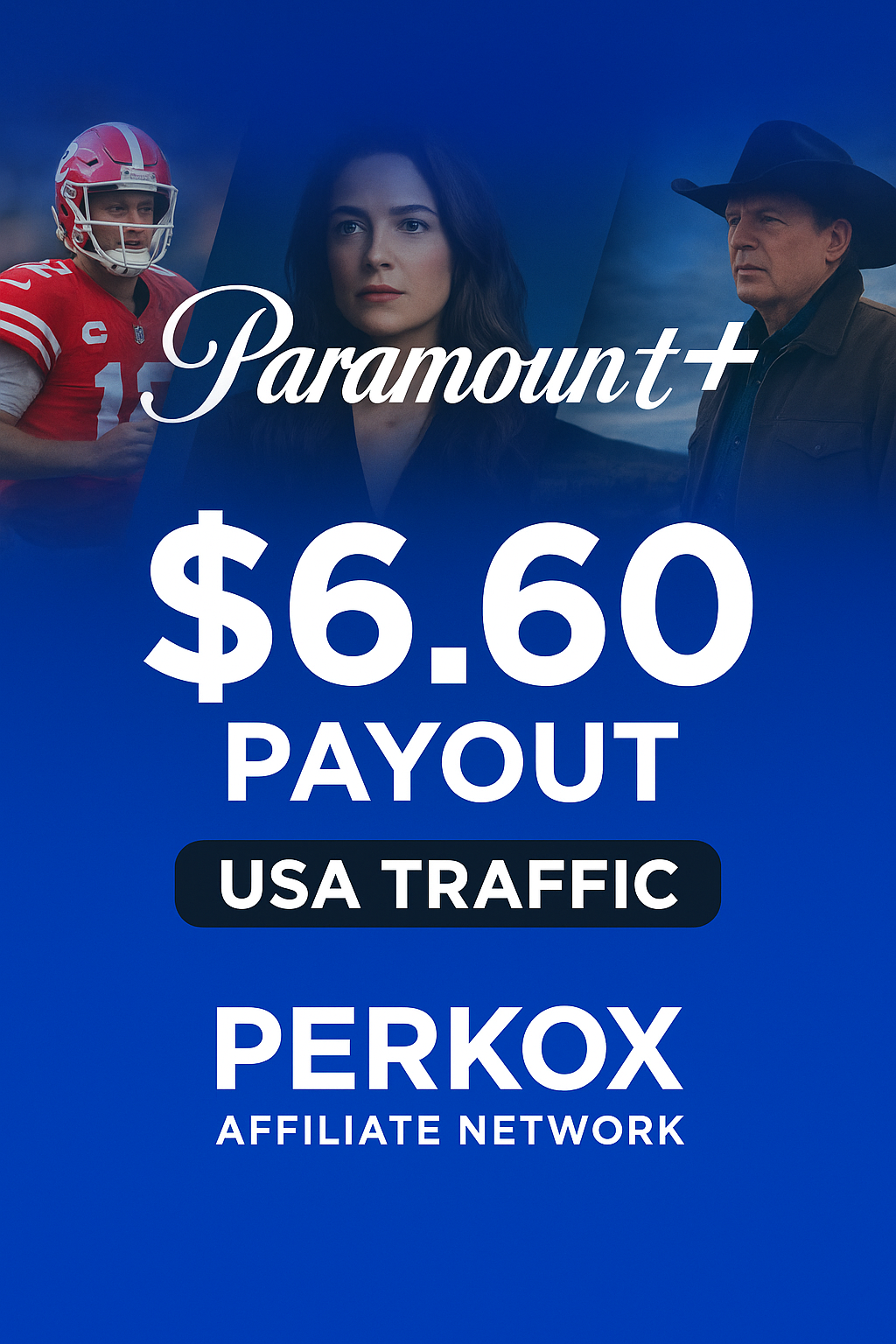
  • Paramount+ Affiliate Program 2026: Exclusive VOD CC Submit Offers

    Paramount+ Affiliate Program 2026: Exclusive VOD CC Submit Offers

    This guide covers affiliate marketing for mobile developers and publishers — with practical, technical detail you can apply today.

    When it comes to high-paying affiliate offers, few verticals perform as consistently as VOD (Video on Demand). Streaming services dominate digital entertainment, and affiliates who tap into this demand can make serious money.

    That’s why Perkox is excited to announce an exclusive Paramount+ affiliate offer — one of the hottest VOD CC Submit campaigns for USA traffic.

    If you’re an affiliate or media buyer looking to scale, keep reading. This blog explains why Paramount+ is the perfect offer to promote, how CC Submit offers work, and why running this campaign through Perkox can be a game-changer for your earnings.


    Why Affiliates Love VOD Offers

    Streaming platforms like Netflix, Hulu, Disney+, and Paramount+ are at the center of today’s entertainment industry. Users are cutting cable and switching to subscription-based platforms, making VOD affiliate offers one of the most in-demand verticals for publishers.

    Here’s why VOD offers are powerful for affiliates:

    • Massive Consumer Demand → Streaming is now the #1 way Americans consume content.
    • Tier 1 Audience → USA traffic delivers strong conversion rates and high payouts.
    • Recurring Revenue Potential → Subscribers often stay for months, making campaigns highly profitable for advertisers (and attractive for affiliates).
    • Universal Appeal → Everyone watches movies, shows, and live sports — meaning offers convert across demographics.

    Paramount+ Affiliate Offer: How It Works

    Perkox gives affiliates exclusive access to Paramount+ campaigns — a global brand with a massive entertainment library including:

    • Movies from Paramount Pictures.
    • Hit TV series.
    • Live sports (NFL, UEFA, NCAA).
    • News and originals only available on Paramount+.

    The affiliate model for Paramount+ works as a CC Submit (Credit Card Submit) offer for USA traffic.

    ✅ What’s a CC Submit Offer?

    A CC Submit requires users to enter valid credit card details when signing up for a free trial or subscription. For affiliates, this means:

    • Higher payouts per conversion.
    • High-intent users (credit card details = strong buyer signals).
    • Premium audience with a higher lifetime value.

    With Paramount+, you’re promoting a trusted entertainment brand — users already recognize the name and are comfortable subscribing. That trust factor means higher CR (conversion rates) compared to generic VOD offers.


    Why Run Paramount+ with Perkox?

    There may be multiple networks out there, but Perkox affiliates get an edge with Paramount+:

    1. Exclusive Access → Not every network has Paramount+ offers. Perkox does.
    2. High Payouts for USA CC Submit → Competitive rates ensure affiliates make maximum profit.
    3. Strong EPCs → Paramount+ has high brand recognition, so traffic converts fast.
    4. Tier 1 Focus → USA campaigns deliver consistent ROI for affiliates running media buys.
    5. Offerwall Integration → Publishers with web or mobile apps can monetize entertainment-hungry users with VOD rewards.

    Traffic Sources That Work Best for Paramount+

    Affiliates can promote Paramount+ effectively across multiple traffic channels. Here’s where it shines:

    • Native Ads (Taboola, Outbrain, MGID) → Perfect for “cut the cord” angles.
    • Social Ads (Facebook, TikTok, Instagram) → Leverage entertainment-focused creatives and fan communities.
    • Email Marketing → Sweepstakes + VOD combo funnels can bring huge CTRs.
    • Search PPC → Branded + generic streaming keywords perform well.
    • Rewarded Offerwalls → Users looking for entertainment rewards convert easily on CC Submit VOD offers.

    Proof of Profitability: Why Affiliates Make Money with VOD CC Submit

    Let’s break down a realistic example:

    • Traffic Source: Facebook Ads targeting “TV lovers” in the USA.
    • Offer: Paramount+ CC Submit via Perkox.
    • Payout: $6.60 per valid CC submit.
    • Ad Spend: $1,000
    • Average CPL (Cost Per Lead): $4.80
    • Conversions: 208 sign-ups → $1,372 revenue
    • Profit: $372 (37% ROI)

    This shows how high-volume conversions make Paramount+ a winner. Even with a lower payout than financial or sweepstakes campaigns, the mass-market demand for streaming services ensures stable ROI.


    Why Affiliates Trust Perkox for VOD and CC Submit

    Affiliates need more than just access to Paramount+ — they need a network that delivers support, payments, and optimization tools.

    Perkox provides:

    • Exclusive VOD campaigns like Paramount+.
    • Fast payments (weekly, bi-weekly, monthly).
    • Tracking & optimization tools.
    • Dedicated affiliate managers.
    • Global GEO coverage with a Tier 1 focus.

    This makes Perkox the #1 affiliate network for publishers and media buyers ready to scale VOD campaigns in 2025.

    Final Word: Paramount+ + Perkox = A Winning Combination

    If you’re looking for a proven, profitable offer to scale, Paramount+ is the one. With demand for streaming skyrocketing, this exclusive VOD CC Submit offer for USA traffic gives affiliates the perfect chance to maximize EPCs and ROI.

    👉 Ready to start promoting Paramount+?
    Join Perkox Today and Get Access to Exclusive VOD Offers


    Start Monetizing with Perkox

    Register as a Perkox publisher → — integrate the offerwall SDK and start earning from rewarded monetization. Read the documentation →

  • How to Make $5,000/Day with CC Submit & PIN Submit Offers (2026 Guide)

    How to Make $5,000/Day with CC Submit & PIN Submit Offers (2026 Guide)

    This guide covers mobile app monetization for mobile developers and publishers — with practical, technical detail you can apply today.

    If you’ve ever dreamed of hitting those $5K/day milestones as an affiliate marketer, the fastest path there in 2025 is through high-paying CC Submit and PIN Submit CPA offers.

    And if you’re wondering where to find the highest-converting, most profitable campaigns in this space—look no further than Perkox, the next-generation CPA network built for results.


    🔍 What Are CC Submit and PIN Submit Offers?

    💳 CC Submit Offers

    Credit Card Submit offers require the user to enter their credit card details, typically for:

    • Free trials (Keto, skin care, tech gadgets)
    • Low-cost purchases (just pay shipping)
    • Access to VIP content or tools

    💰 Average payout: $45 to $150+ per lead

    These offers are golden because they reflect strong buyer intent, making advertisers pay premium rates.

    🔐 PIN Submit Offers

    The user submits their mobile phone number and confirms via SMS code (PIN). Ideal for:

    • Ringtones, wallpapers, games, content subscriptions
    • Teen/young adult mobile users in Tier 2 & Tier 3 GEOs

    💰 Average payout: $0.80 to $5 per verified PIN
    📱 Volume play—perfect for push, pop, and app traffic


    🚀 Why Affiliates Choose Perkox for CC & PIN Offers

    Exclusive High-Payout Campaigns
    Hand-picked direct advertiser deals in Tier 1 (US/CA/UK/AU) and Tier 2/3 GEOs like India, Egypt, South Africa, and LATAM.

    Blank Checkout & Pre-Fill Tech
    Boost conversions with auto-filled forms and smart redirects. Less friction, more money.

    Fast Tracking + Postbacks
    Real-time data with advanced tracking tools, API, and S2S postback integration.

    Weekly Payouts & Affiliate Support
    Work with a human. Get help, creatives, advice, and payments on time—every time.


    💡 How to Make $5,000/Day with CC & PIN Submit Offers

    Here’s the real blueprint media buyers and affiliates are using in 2025 to scale:


    1. Choose the Right GEOs

    • CC Submit: Focus on Tier 1 (US, CA, UK, AU)
    • PIN Submit: Focus on Tier 2/3 (PH, IN, ZA, EG, BR, AR)

    🔍 Why it matters: Some GEOs convert better at volume. Some pay more per lead.


    2. Run Prelanders That Sell

    Create review-style or viral news pages that hype the offer (we provide prelanders at Perkox). Use:

    • Social proof: “5,000 users just got this skincare free trial”
    • Scarcity: “Only 17 bottles left!”
    • Curiosity: “You won’t believe what happens when…”

    🧠 Pro tip: Add a timer or “verification” step to increase urgency.


    3. Use Push, Native & Email Traffic

    • Push ads work incredibly well for PIN submits
    • Native ads for CC trials & blank checkouts (Taboola, MGID, Revcontent)
    • Email drops for warmed-up traffic (Sweeps + CC Submit funnel)

    🧪 Tip: Run sweepstakes in front of your CC offer. Build trust, then redirect to CC page = double the ROI.


    4. Split Test Creatives and Landers

    Test headlines, images, and CTAs across different traffic sources.

    🎯 Example:

    • “Get a FREE Keto Bottle” vs. “Lose 10lbs Without Exercise”
    • Image of real person vs. stock photo

    5. Track Everything with Perkox

    Plug in your postbacks, tokens, and use real-time EPC data to kill underperformers and scale winners.


    6. Reinvest Profits Smartly

    Once you hit $500/day, reinvest 30–40% into traffic and expand into multiple GEOs or verticals.

    💸 Scale what works. Drop what doesn’t.


    🧠 Affiliate Success Scenario

    Let’s break down what a $5K/day strategy might look like:

    Type GEO Offer EPC Conversions Daily Revenue
    CC Submit US Keto Trial $3.80 700/day $2,660
    CC Submit UK Skincare $5.50 300/day $1,650
    PIN Submit IN + PH Mobile Games $1.20 570/day $684
    PIN Submit SA VIP Content $0.95 500/day $475

    🧮 Total: $5,469/day


    🔗 Why Perkox Is the #1 Choice for Serious Affiliates

    ✅ Direct advertisers, top payout
    ✅ Fast onboarding, fast payouts
    ✅ Tools, tracking, support—all in one place
    ✅ 100% affiliate-first mindset


    📣 Final Thoughts: Start Making $5,000/Day Today

    If you’re still running low-EPC offers, or stuck on networks that cap your traffic, now’s the time to evolve.

    Perkox has the offers, the payout, the tools—and the community—to help you reach real affiliate freedom.

    📩 Join today: www.perkox.com
    📲 Connect on Telegram: @nacerdane
    💼 Talk to your affiliate manager for top offers and traffic plans.


    Start Monetizing with Perkox

    Register as a Perkox publisher → — integrate the offerwall SDK and start earning from rewarded monetization. Read the documentation →

  • The Power of Incentive Offers: How Rewarded Traffic Drives Results in 2026

    The Power of Incentive Offers: How Rewarded Traffic Drives Results in 2026

    This guide covers Perkox offerwall for mobile developers and publishers — with practical, technical detail you can apply today.

    In the world of performance marketing, incentive offers (also known as rewarded offers) are a powerful tool for both advertisers and publishers. Whether you’re an app developer, media buyer, or affiliate, incentive-based CPA networks can open up a whole new layer of monetization and Perkox is proud to be one of the leading platforms supporting this model.


    💡 What Are Incentive Offers?

    Incentive offers reward users for completing specific actions — like signing up, submitting an email, downloading an app, or filling out a credit card form. In exchange, the user receives a reward (coins, cash, crypto, in-game currency, etc.).

    Popular across gaming, survey, and finance verticals, these offers are high-converting when paired with the right audience and traffic quality.


    🚀 Why Incentive Traffic Works

    Rewarded offers perform well because:

    • 🎯 Users are motivated they have a clear reason to complete the task
    • 📈 High conversion rates users follow through more often
    • 💰 Increased user engagement especially in gaming and mobile apps
    • 🌍 Scalable across global GEOs works well in Tier 1 and Tier 2 regions
    • 🛠️ Perfect for offerwalls, GPT sites, browser extensions, and more

    🏆 Top Incentive CPA Networks (2025 Ranking)

    Here are some of the top networks known for running strong incentive offers:

    1. Perkox – Offers both incentive and non-incentive campaigns, trusted by 9,600+ publishers, 80% revenue share, crypto-ready, fast payouts.

    💡 Pro Tip: Look for networks that clearly label incentive vs. non-incentive and offer transparent conversion tracking.


    🔥 Why Perkox Stands Out

    At Perkox, we’ve built a platform from the ground up to support both incentive and non-incentive traffic — with full transparency and advanced fraud prevention tools.

    • 80% rev share for publishers
    • Crypto, CPI, CC Submit, and Fintech offers
    • Clean and mobile-responsive offerwall
    • Full traffic source review process
    • Real-time reporting & smart optimization

    Whether you run a mobile app, browser extension, or a GPT site — Perkox helps you maximize your monetization with performance-driven offers.


    📈 Performance by Vertical

    At Perkox, we allow incentive traffic on selected high-performing verticals where user engagement and quality remain strong. These include:

    Vertical Incentive Traffic Allowed Performance
    Mobile Games ✅ Yes ⭐⭐⭐⭐⭐
    Lead Generation ✅ Yes ⭐⭐⭐⭐
    Utility Apps (e.g. VPN, Cleaners) ✅ Yes ⭐⭐⭐⭐
    Surveys ✅ Yes ⭐⭐⭐⭐⭐
    Crypto Signups ❌ No ⭐⭐
    Finance (CC Submit) ❌ No ⭐⭐
    Sweepstakes ❌ No
    Nutra Trials ❌ No

    ⚠️ We review all traffic sources before approval to ensure compliance and quality across both incentive and non-incentive flows.

    🎯 Final Thoughts: Incentive Done Right

    Incentive offers aren’t just a “quick-win” tactic — when used responsibly, they are one of the most scalable and profitable traffic models available.

    With Perkox, you’re not just joining another network — you’re plugging into a smart, flexible system that supports both types of traffic and gives you the tools to earn more.


    👉 Ready to monetize with rewarded traffic the right way?
    Get started with Perkox Offerwall today:
    🔗 www.perkox.com/perkwall


    Would you like this formatted for WordPress, turned into a downloadable PDF, or repurposed for LinkedIn/Twitter threads?

    You said:

    please correct vericila that we allow incetive trffic is Mobile game and lead generation and itillies app like VPN

    ChatGPT said:

    Got it, Nacer! Here’s the corrected and updated section of the blog to reflect the verticals where Perkox allows incentive traffic:


    Start Monetizing with Perkox

    Register as a Perkox publisher → — integrate the offerwall SDK and start earning from rewarded monetization. Read the documentation →

  • Incentive & Rewarded Offers in 2026: How Surveys & Tasks Drive Revenue

    Incentive & Rewarded Offers in 2026: How Surveys & Tasks Drive Revenue

    This guide covers mobile app monetization for mobile developers and publishers — with practical, technical detail you can apply today.

    Incentive offers also known as rewarded offers have evolved from basic loyalty mechanics into one of the most profitable monetization methods in the digital ecosystem. Whether you’re a mobile app publisher, a game developer, or a media buyer, integrating incentive offers like surveys and gaming actions into your monetization strategy can unlock new revenue streams and boost user engagement.

    As we move into 2025, user behavior, data privacy, and value exchange are shaping the next phase of performance marketing. This blog dives deep into how rewarded offers are booming, why surveys and gaming verticals are leading the charge, and how Perkox is helping partners capitalize on this growing trend.


    💡 What Are Incentive Offers?

    Incentive or rewarded offers are CPI/CPL/CPA-based campaigns where users complete a specific action like filling out a survey, downloading a game, or signing up for a product in exchange for a reward. These rewards can be virtual currency, game items, cashback, or points that enhance the user experience in an app or game.

    With offerwalls, spin-to-win quizzes, and in-app engagement systems, publishers can integrate these offers seamlessly into their products, making monetization part of the fun.


    🕹️ Gaming and Survey Offers: The Perfect Match

    Two verticals that dominate the incentive space are Gaming and Surveys. Here’s why:

    1. 🎮 Gaming Offers

    • Massive User Base: The mobile gaming industry is expected to surpass $130 billion in 2025, with more than 3 billion global players.
    • High Conversion: Gamers are accustomed to in-game currencies and rewards, making them ideal participants for incentivized actions.
    • Retention-Friendly: When integrated into gameplay (e.g., rewarded videos or in-game offerwalls), these offers increase retention and session time.

    2. 📝 Survey Offers

    • Data Goldmine: Market research companies are willing to pay top dollar for user insights.
    • Lightweight and High-Payout: Surveys often require low effort but yield strong payouts, making them a favorite for both users and publishers.
    • Global Reach: Users from Tier 1, 2, and even Tier 3 countries can participate, making surveys incredibly scalable.

    📈 Trends in 2025: Why Incentive Offers Are Booming

    ✅ 1. Value Exchange Is the New Normal

    Users are more aware than ever of their data and time. They want value in return. Rewarded experiences give them control and instant gratification, creating a win-win for advertisers and publishers.

    ✅ 2. Better Tracking & Fraud Prevention

    With advanced MMP integrations and fraud filters, incentive campaigns in 2025 are more transparent and secure than ever. Platforms like Perkox provide real-time postback tracking, ensuring advertisers get clean data and publishers get timely payouts.

    ✅ 3. More Advertisers Entering the Space

    E-commerce, fintech, crypto, and even education brands are adopting incentive campaigns to boost acquisition at scale. It’s not just gaming anymore.

    ✅ 4. Hybrid Monetization Models

    Publishers are blending ads, subscriptions, and offerwalls to maximize revenue. Incentive offers complement all models by filling the gaps where traditional monetization fails.


    💰 How Much Can You Earn with Rewarded Offers?

    Depending on your traffic source and GEOs, the average eCPMs can range between:

    GEO Vertical eCPM Range
    Tier 1 Gaming $20 – $100+
    Tier 2/3 Surveys $5 – $30
    Global Utilities/Nutra $10 – $70

    Some high-performing apps using offerwalls have reported 30-50% revenue increases just from integrating rewarded offers.


    🚀 How Perkox Helps You Scale

    At Perkox, we specialize in performance-based rewarded traffic. Whether you’re looking to monetize your app, run engaging surveys, or acquire high-intent users, our platform provides:

    Custom AI-Powered Offerwall with smart targeting
    Real-time postback tracking for campaign-level transparency
    Direct and exclusive offers in gaming, sweepstakes, VOD, nutra, and finance
    Dedicated support to optimize performance
    IFrame and API, and direct link integrations for maximum flexibility

    With our tools, publishers have full control, and advertisers get high-quality, motivated users.


    📊 Final Thoughts: Don’t Miss the Incentive Revolution

    2025 is shaping up to be the golden age of rewarded advertising. Users are more engaged, offers are more diverse, and the technology is finally mature enough to support scalable, fraud-free growth.

    If you’re not yet leveraging incentive offers—whether you’re a brand, affiliate, or app developer you’re leaving serious money on the table.

    Join Perkox today, and let’s turn your traffic into loyal users and consistent revenue.


    Start Monetizing with Perkox

    Register as a Perkox publisher → — integrate the offerwall SDK and start earning from rewarded monetization. Read the documentation →

    Related Articles

  • iOS 14 Offerwall Changes: What Developers Need to Know in 2026

    iOS 14 Offerwall Changes: What Developers Need to Know in 2026

    This guide covers offerwall monetization for mobile developers and publishers — with practical, technical detail you can apply today.

    With the release of iOS 14, Apple introduced several user-focused privacy enhancements. Among them were stricter rules around advertising and data tracking, dramatically changing how app developers can monetize their platforms. One major shift: developers are now prohibited from using traditional rewarded offers, such as offerwalls, in their iOS apps.


    🔒 Apple’s Updated Guideline: 3.2.2(vi)

    “Apps should not require users to rate the app, review the app, watch videos, download other apps, tap on advertisements, enable tracking, or take other similar actions to access functionality, content, use the app, or receive monetary or other compensation…”

    This policy directly impacts traditional offerwalls that reward users for completing these very actions.


    🚫 Why Traditional Offerwalls Are No Longer Viable on iOS

    Let’s be honest — Apple’s updated policy reads like a checklist of what most traditional offerwalls offer: watching videos, installing apps, submitting reviews, and more. These methods, while common in the past, pose several problems:

    • They manipulate App Store rankings with incentivized installs and reviews.
    • They often involve aggressive data tracking and attribution techniques.
    • They reduce genuine user experience by turning in-app actions into a paid chore.

    Apple’s decision stems from a desire to maintain the integrity of its App Store and ensure that app visibility is driven by organic engagement — not manufactured activity.


    🔄 IDFA Changes & Technical Barriers

    With iOS 14, Apple also introduced App Tracking Transparency (ATT). Now, every app must request user permission to track activities across apps and websites. Unsurprisingly, most users opt out.

    For traditional offerwalls that rely on IDFA-based tracking, this is a major problem. Without consent, you can’t properly track conversions or reward users, breaking the model entirely.


    ✅ Why Perkox’s Rewarded Survey Offerwall Stands Strong

    Here’s the good news: Perkox doesn’t rely on outdated or invasive methods. Instead, we provide a Rewarded Survey Offerwall, which operates outside of Apple’s restricted practices.

    Unlike traditional offerwalls, Perkox surveys:

    • Don’t require installs, ratings, or App Store interactions
    • Don’t track users across apps or websites
    • Use self-declared data, with user consent, for market research purposes

    We provide users with real value by letting them share opinions instead of downloads. This aligns with both Apple’s guidelines and user expectations.


    🔁 Smooth Transition: Familiar UI, Better Experience

    Already using a traditional offerwall? Don’t worry. Perkox’s Offerwall is designed to look and feel similar, ensuring seamless adoption by users.

    Your users won’t even notice the change — but you’ll notice the increase in compliance, user trust, and potentially, revenue.


    💡 What You Should Do Now

    If you’re still relying on outdated rewarded offers, now’s the time to pivot. Here’s your action plan:

    1. Remove traditional incentivized actions that violate Apple’s rules
    2. Integrate Perkox’s Rewarded Survey Offerwall
    3. Continue earning through high-quality, compliant offers
    4. Enjoy greater user trust and App Store safety

    👉 Join Perkox today and future-proof your monetization strategy.
    Get Started Here


    📌 At Perkox, we’re committed to staying ahead of industry shifts — so you can focus on growing your app, your audience, and your revenue.

    #Perkox #iOS14 #OfferwallAlternative #AppMonetization #RewardedSurveys #PrivacyCompliant


    Start Monetizing with Perkox

    Register as a Perkox publisher → — integrate the offerwall SDK and start earning from rewarded monetization. Read the documentation →

    Related Articles