The Free App Monetization Problem
You shipped a free mobile app. It has users, session time, and maybe even positive reviews — but zero revenue. You’re not alone: roughly 97% of apps in the Google Play Store are free, and the App Store distribution is similar. The question every developer eventually faces is simple: how do free apps make money without destroying the user experience?
The tension is real. Every monetization tactic introduces some degree of friction — a paywall interrupts the flow, a banner ad occupies screen real estate, a subscription prompt can trigger an uninstall. The art of free app monetization is choosing methods that align revenue with user value rather than against it. Ads that block content create churn; ads that reward engagement create revenue. Paywalls that gate core features lose users; paywalls that unlock optional convenience convert at a healthy clip.
This guide breaks down four proven monetization methods, compares them across revenue potential, user friction, and implementation difficulty, and shows you how to layer them for maximum yield. Whether you’re publishing your first app or optimizing an existing one with 500K DAU, you’ll find actionable benchmarks and decision frameworks below.
Method 1: In-App Purchases (IAP)
In-app purchases let users buy digital goods or features inside your app. It’s the most established monetization mechanism in mobile, powering the majority of top-grossing games and a large share of non-game apps. There are three broad IAP categories:
- Consumables: Items that get used up — coins, gems, lives, boosts. Users buy repeatedly. Common in casual and mid-core games.
- Non-consumables: One-time unlocks — remove ads, premium themes, bonus levels, extra character slots. The user pays once and owns it forever.
- Auto-renewable subscriptions: Recurring access to content or services. Covered separately in Method 3 because the economics and psychology differ significantly from one-time purchases.
Why IAP works
IAP aligns revenue with engagement. Users who derive value pay voluntarily; non-paying users still contribute by expanding your audience, improving store rankings, and providing word-of-mouth. The 5–10% of users who convert to paying users — the “whales” and “minnows” — often generate 80%+ of IAP revenue, following a classic Pareto distribution.
Implementation notes
Both Apple (StoreKit 2) and Google (Google Play Billing Library 7) provide native billing frameworks. You’ll need server-side receipt validation to prevent fraud, and you should design your economy so that free-to-play users can reach meaningful progression without paying — gating too aggressively tanks retention. A common pitfall: pricing tiers that don’t match regional purchasing power. Use Apple’s and Google’s price point tables to localize, and run A/B tests on your store UI to find the conversion sweet spot.
For apps where users are reluctant to spend real money directly — especially in markets with low ARPU — consider pairing IAP with an offerwall (Method 2) so users can earn premium currency by completing tasks rather than paying cash.
Method 2: Rewarded Ads and Offerwalls
If you want to monetize a mobile app without ads in the traditional interruptive sense, rewarded advertising is the closest thing to a win-win in the monetization toolbox. Users opt in to watch a video, complete a survey, install a companion app, or reach a game milestone in exchange for in-app rewards — coins, premium currency, extra lives, ad-free time, or unlockable content.
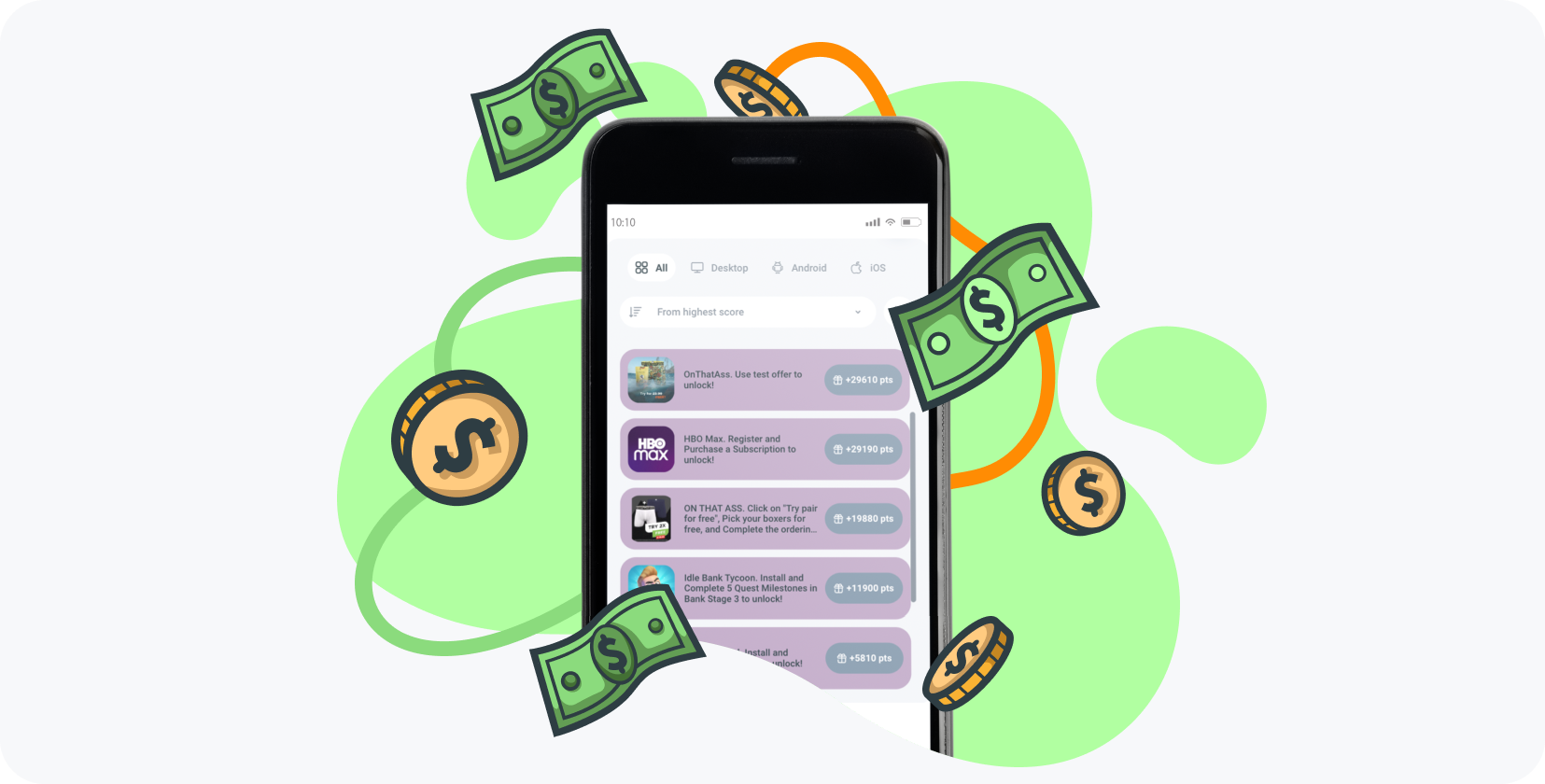
An offerwall is a dedicated in-app surface that presents multiple rewarded tasks at once, letting users choose how they want to earn. Think of it as a mini-app-store inside your app: the user browses offers, completes one, and the reward is credited to their account. Offerwalls typically generate higher eCPMs than banner or interstitial ads because each completed task pays significantly more than a single ad impression.
Rewarded video vs. offerwalls
Rewarded video and offerwalls solve related but distinct problems. Rewarded video is a single, high-engagement ad format — watch a 15–30 second clip, get a reward. Offerwalls are a broader marketplace of tasks that can include video, surveys, app installs, sign-ups, and more. For a deeper breakdown of which format fits your app type, see our offerwall vs. rewarded video revenue comparison.
Retention impact
The biggest concern developers have with any monetization method is its effect on retention. A well-implemented offerwall can improve D1 and D7 retention because it gives non-paying users a path to premium content, increasing session depth and return visits. Our offerwall retention impact study tracked retention across 40+ apps and found that users who engaged with the offerwall had 18–30% higher D7 retention than the baseline free-to-play cohort.
Implementation notes
Integrating an offerwall is typically a single SDK install plus a few lines of code to present the wall and handle reward callbacks. The Perkox SDK documentation covers the full integration in under an hour for most apps. Key design decisions: where to place the offerwall entry point (settings menu vs. a prominent “Earn” button), how to frame the reward currency, and how to notify users when a task completes. Our offerwall UX design principles guide covers these in detail — the short version is that transparency and clear reward visibility drive 2–3x more engagement than a buried link.
Method 3: Subscriptions
Subscriptions convert a one-time transaction into recurring revenue, and they’re the fastest-growing monetization model outside of gaming. Apple and Google both support auto-renewable subscriptions with introductory pricing, family sharing, and promotional offers. The appeal is obvious: predictable MRR, higher LTV, and a valuation multiple that investors love.
When subscriptions work — and when they don’t
Subscriptions work best when your app delivers ongoing, renewing value. Streaming services, productivity tools, cloud storage, fitness apps, news, and AI-powered features all fit because the user gets fresh utility every billing cycle. A calculator app, a one-off utility, or a game with finite content struggles to justify a monthly fee — users churn once they’ve extracted the core value.
For a side-by-side comparison of subscription economics against offerwall-based revenue (especially for apps with low willingness-to-pay audiences), read our analysis of offerwall vs. subscription apps. The headline: subscriptions capture high LTV from a small paying minority, while offerwalls monetize the large non-paying majority. Many apps run both.
Implementation notes
Use StoreKit 2 on iOS and Google Play Billing for subscriptions. You’ll need to handle grace periods, billing retries, family sharing, and refund flows — the platform APIs cover most of this, but server-side validation is mandatory for production. Price anchoring matters: offering a $9.99/month tier makes a $2.99/month tier feel like a bargain. Free trials convert better than introductory pricing for most app categories, but test both. Watch your trial-to-paid conversion rate closely — anything below 30% suggests your trial experience isn’t demonstrating enough value.
Method 4: Sponsorships and Partnerships
Sponsorships are the oldest monetization model, adapted for mobile. A brand pays you directly — not through an ad network — to reach your users. This can take several forms:
- Branded content: A sponsor underwrites a level, a workout, a playlist, or a feature inside your app. The user sees the brand contextually, not as an interruptive ad.
- Exclusive offers: A partner provides discounts or perks that your users unlock through your app. You get a sponsorship fee; the partner gets qualified leads.
- White-label or co-branded versions: An enterprise pays for a customized build of your app for their employees or customers.
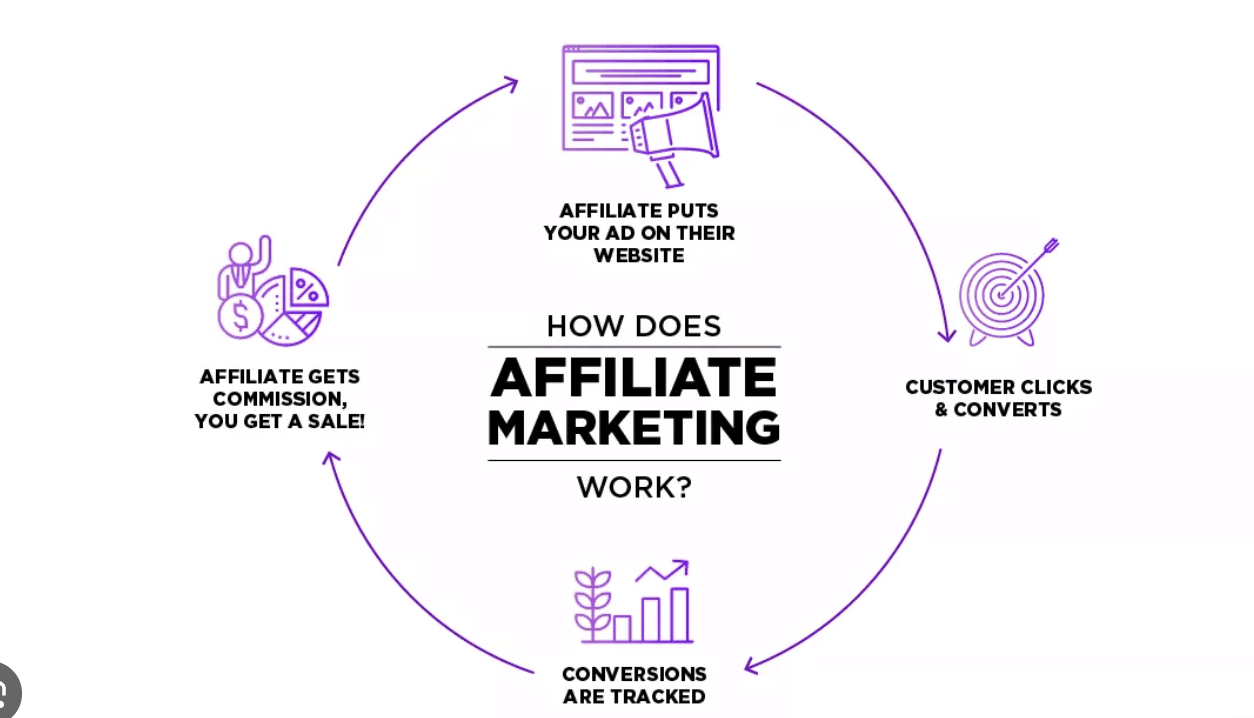
- Affiliate / performance partnerships: You earn a commission when users complete a desired action (sign-up, purchase) through your app. This blurs the line with offerwalls but is typically brand-to-brand rather than marketplace-driven.
Why sponsorships are underrated
Sponsorships bypass ad-network revenue share entirely — you keep 100% of the deal. They also avoid the “ad fatigue” problem because the brand integration is native and limited. The catch is scalability: you need a dedicated biz-dev function (or yourself playing that role) to source and close deals, and sponsors want apps with engaged, well-defined audiences. For apps in a specific vertical — fitness, finance, education, travel — sponsorships can outperform ad networks by a wide margin once you reach 100K+ MAU.
Implementation notes
No SDK required — sponsorships are deal-driven, not code-driven. The technical work is building a lightweight integration surface: a configurable branded asset, a deeplink for partner offers, or a private API for the sponsor to track conversions. Keep the integration clean and reusable so you can onboard multiple sponsors without bespoke work for each.
Comparison: Which Monetization Method Fits Your App?
Here’s a side-by-side comparison of all four methods across the three dimensions that matter most: revenue potential, user friction, and implementation difficulty.
| Method |
Revenue Potential |
User Friction |
Implementation Difficulty |
Best For |
| In-App Purchases |
High (game economies); Medium (utilities) |
Low — opt-in, no interruption |
Medium — billing SDK + server validation + economy design |
Games, apps with virtual economies, premium feature unlocks |
| Rewarded Ads / Offerwalls |
Medium-High — monetizes non-paying majority |
Low — fully opt-in, user-initiated |
Low — single SDK, callbacks, UI entry point |
Free-to-play games, apps with low willingness-to-pay, global audiences |
| Subscriptions |
High (recurring, compounding LTV) |
Medium-High — recurring payment, cancellation risk |
Medium-High — billing, trials, retention flows, dunning |
Content, productivity, SaaS-style apps with ongoing value |
| Sponsorships |
Variable — deal-dependent, 100% margin |
Low — native, non-interruptive |
Low (technical) / High (biz-dev) |
Niche apps with defined audiences (fitness, finance, education, travel) |
How to Combine Multiple Revenue Streams
No single monetization method captures your full revenue ceiling. The highest-earning apps layer two or three complementary methods so that different user segments are monetized through the channel that fits them best. Here’s a proven stacking framework:
- Start with IAP or subscriptions to capture your paying minority (5–10% of users). This is your revenue floor.
- Add an offerwall to monetize the non-paying majority (90–95% of users) who will never pull out a credit card but will complete a task for in-app currency. This typically lifts total revenue 20–60% with minimal cannibalization of IAP.
- Layer sponsorships once you have a defined audience large enough to attract brand partners (usually 100K+ MAU in a specific vertical).
- Use interstitial or banner ads sparingly — or not at all — as a fallback for users who don’t engage with the offerwall. Banner ads have low eCPMs and high friction relative to rewarded formats.
The key principle: never force a single monetization path on all users. Let paying users pay. Let non-paying users earn. Let sponsors reach niche audiences natively. When each segment has a friction-appropriate revenue path, total ARPU rises without retention taking a hit.
Real-World Revenue Benchmarks
Numbers vary wildly by category, geography, and app quality, but the following ranges are grounded in industry data and Perkox’s own platform benchmarks across hundreds of integrated apps:
| Metric |
Benchmark Range |
Notes |
| IAP conversion rate |
2–10% |
Games skew higher (5–10%); utilities lower (2–4%) |
| Offerwall engagement rate |
8–25% |
Of non-paying users who see the offerwall entry point |
| Offerwall eCPM (effective) |
$15–$80 |
Varies by geo; US/UK/JP at the high end, emerging markets lower |
| Rewarded video eCPM |
$10–$50 |
Higher completion rate than offerwall tasks but lower per-impression |
| Subscription trial-to-paid conversion |
25–60% |
Below 30% indicates weak trial experience |
| Subscription monthly churn |
5–15% |
Content apps retain better; utility apps churn faster |
| Banner ad eCPM |
$0.10–$2.00 |
Low revenue, high footprint — use as last resort |
| Blended ARPU (layered monetization) |
$0.05–$0.50 / DAU |
Casual games at lower end; vertical apps with offerwall + IAP at higher end |
A practical takeaway: if your app has 50K DAU and you’re monetizing only with banner ads, you’re likely earning $50–$100/day. Adding an offerwall alone can push that to $300–$800/day, and layering IAP on top of the offerwall can reach $1,000+/day — all without degrading retention, provided the offerwall is integrated with care.
Frequently Asked Questions
How do free apps make money without ads?
Free apps monetize without traditional display ads through in-app purchases, subscriptions, offerwalls (which are opt-in rewarded tasks, not interruptive ads), and sponsorships. Offerwalls in particular let you monetize a mobile app without ads in the banner/interstitial sense — users voluntarily complete tasks for rewards, and you earn per completed task. This is one of the most effective forms of free app monetization for audiences with low willingness to pay.
Which monetization method is best for a new app with few users?
For early-stage apps (under 10K DAU), focus on a single, low-friction method to avoid over-engineering. Offerwalls and rewarded video are the fastest to integrate and start generating revenue immediately, even at low scale. Subscriptions and IAP require more economy design and conversion optimization, which pays off once you have enough users to test meaningfully.
Do offerwalls hurt app retention?
When implemented well, offerwalls improve retention rather than hurt it. Users who engage with the offerwall tend to have higher D7 and D30 retention because the reward currency keeps them progressing and returning. The risk comes from poor UX — burying the entry point, unclear reward visibility, or intrusive prompts. Follow established offerwall UX design principles to avoid these pitfalls.
Can I use more than one monetization method at the same time?
Yes, and you should. The highest-ARPU apps stack complementary methods: IAP or subscriptions for paying users, an offerwall for non-paying users, and sponsorships for niche brand deals. The rule is to avoid overlapping friction — don’t show a subscription prompt and an interstitial ad on the same screen. Give each user segment one clear, appropriate revenue path.
How much can a free app realistically earn?
It depends on DAU, geography, and monetization mix. A 50K-DAU app using only banner ads might earn $50–$100/day. The same app with an offerwall can earn $300–$800/day, and layering IAP on top can push it past $1,000/day. Apps with 500K+ DAU and a well-tuned mix of IAP, offerwall, and subscriptions routinely generate $10,000–$50,000+/day.
Related Articles
Further Reading
Start Monetizing Your Free App Today
The best time to add monetization was before launch. The second-best time is now. Whether you’re starting from zero or layering a new revenue stream onto an existing app, Perkox gives you a single SDK that handles offerwall integration, reward delivery, and payout management — so you can focus on building your product, not wiring billing infrastructure.
Ready to see real revenue from your non-paying users? Create your Perkox account and integrate the SDK in under an hour. For full technical documentation, API references, and integration guides, visit the Perkox developer docs.